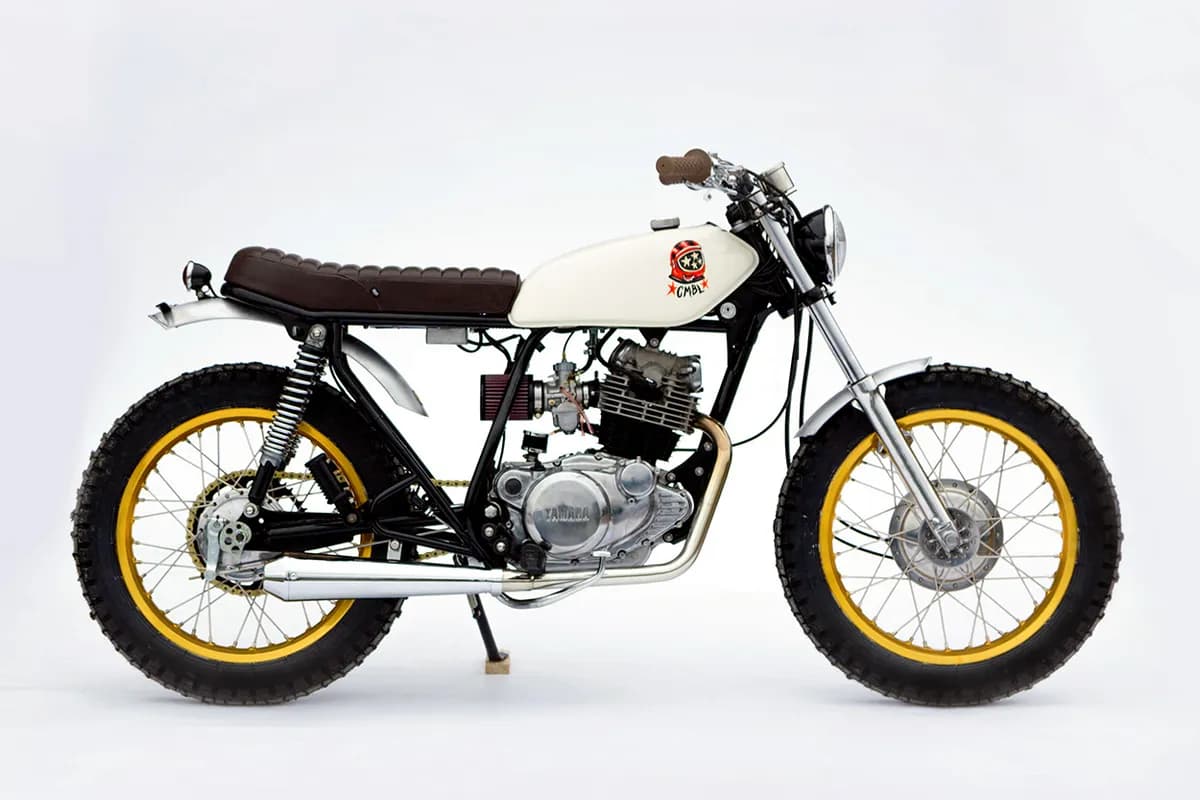
John Eldridge lives in Cornwall, in south-west England. He shapes surfboards, runs an award-winning café and, when he finds the time, builds bikes under the name CMBL (say it like "symbol"). This is one of them: a Yamaha SR250 turned into a street tracker and nicknamed Space Hopper, after the bouncy rubber ball with handles.
The commission came from a London rider who wanted something light, nimble and stylish to slip through city traffic. After weighing up a few candidates, John and his client chose the SR250, knowing from day one that the frame would need major surgery to get clean lines.
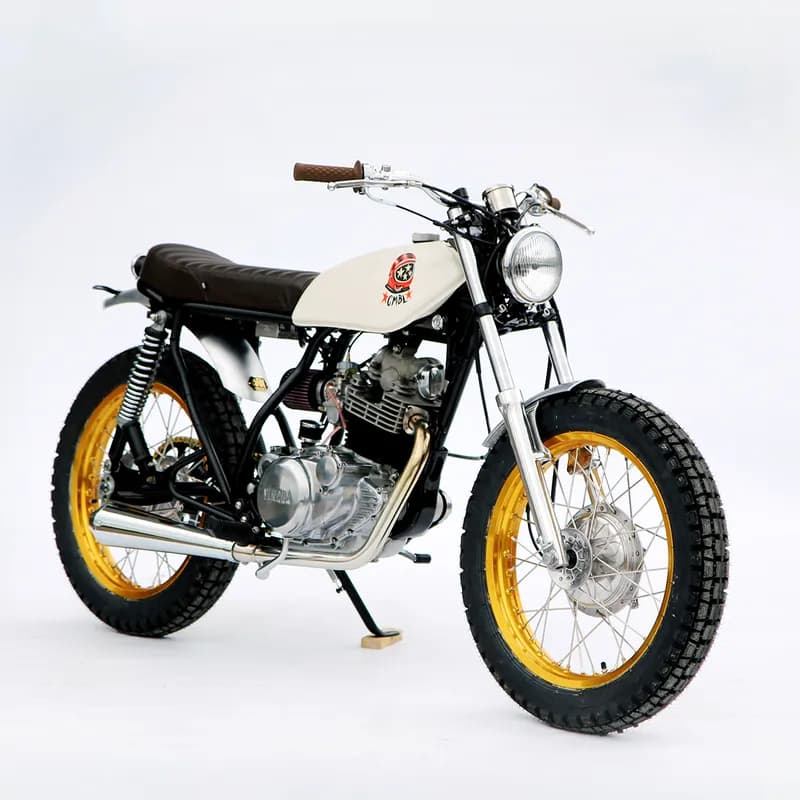
The donor: a Yamaha SR250
The SR250 is a simple Yamaha road bike that went on sale in 1980: an air-cooled four-stroke single of about 250 cc, a steel frame and very little else. It's light, cheap, easy to find second-hand and its engine takes plenty of abuse. That's exactly what an urban street tracker needs: low weight, torque low down and mechanics you can fix in your own garage.
The build
Frame and subframe
The stock SR250's weak spot is the back end: the subframe sits low and isn't exactly pretty. So John stripped the bike and cut away the whole rear of the frame, from under the tank to the pillion peg mounts.
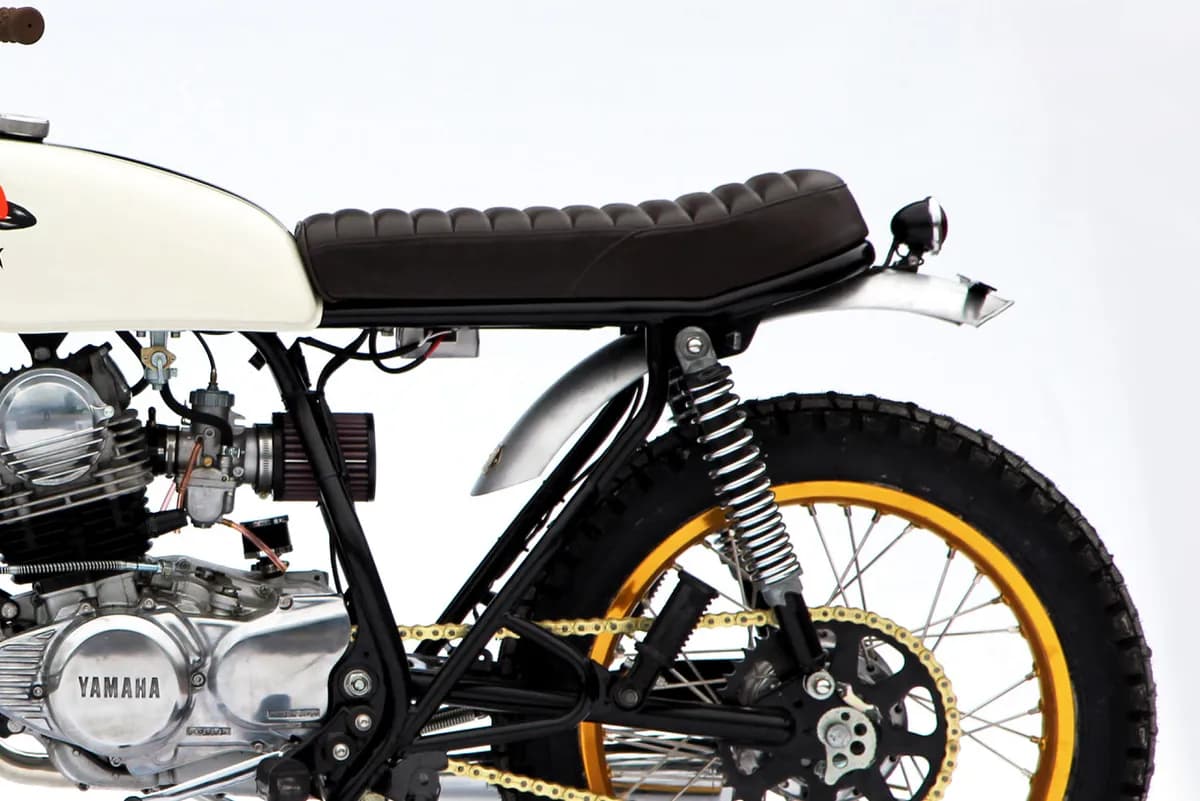
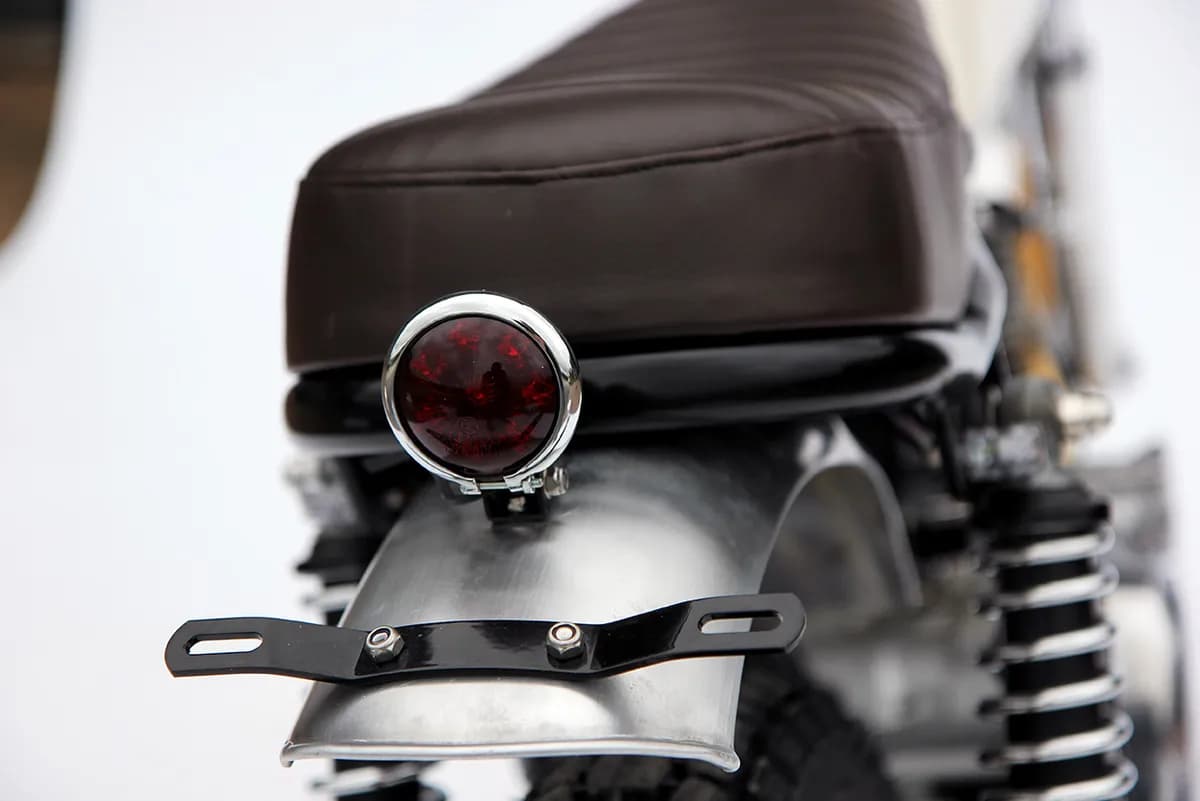
In its place he welded a new, cleaner subframe that sits a good couple of inches (about five centimetres) higher than the original and finishes in a simple rear loop. That gave him the ride height and flat line he was after.
Suspension, wheels and tyres
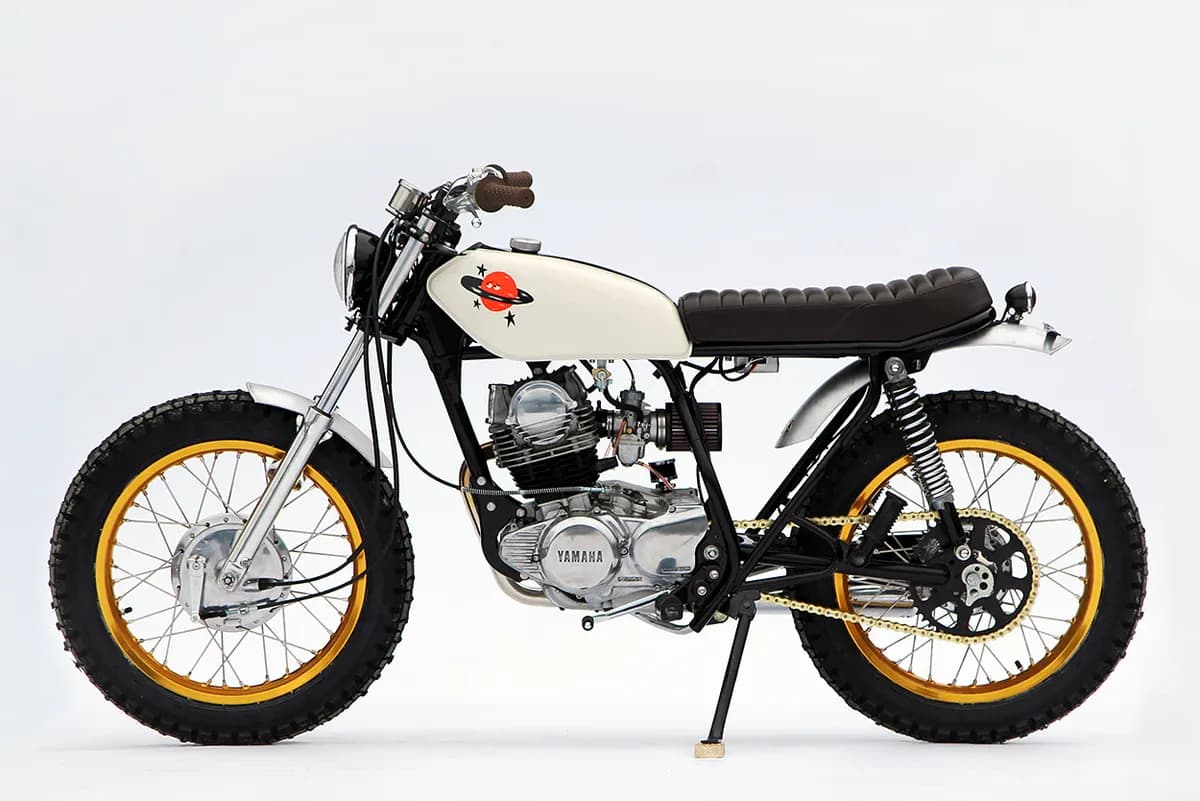
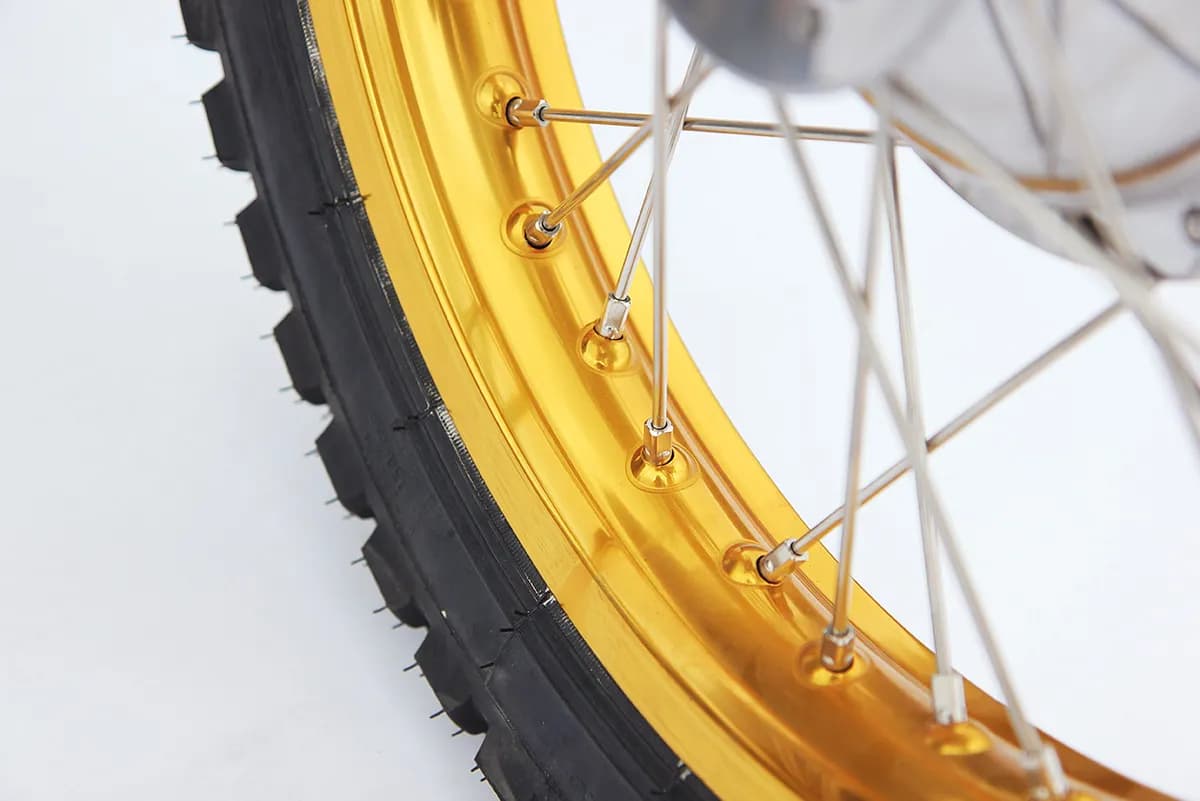
To balance the stance, longer 360 mm shocks lift the tail a little and should also quicken the steering. The original 16-inch rear and 19-inch front rims made way for freshly anodised 18-inch aluminium rims, laced with stainless spokes and fitted with knobbly Heidenau tyres. Matching sizes front and rear give it that flat track look we love.
Tank and seat
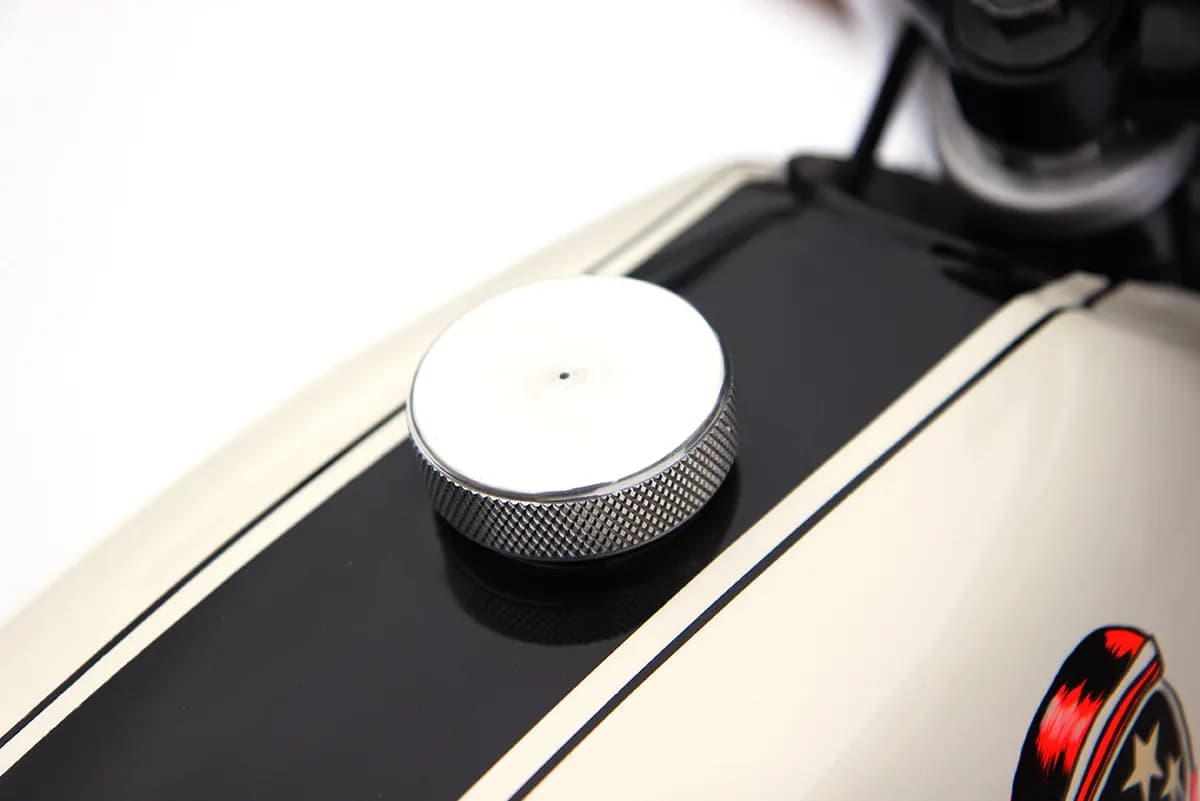
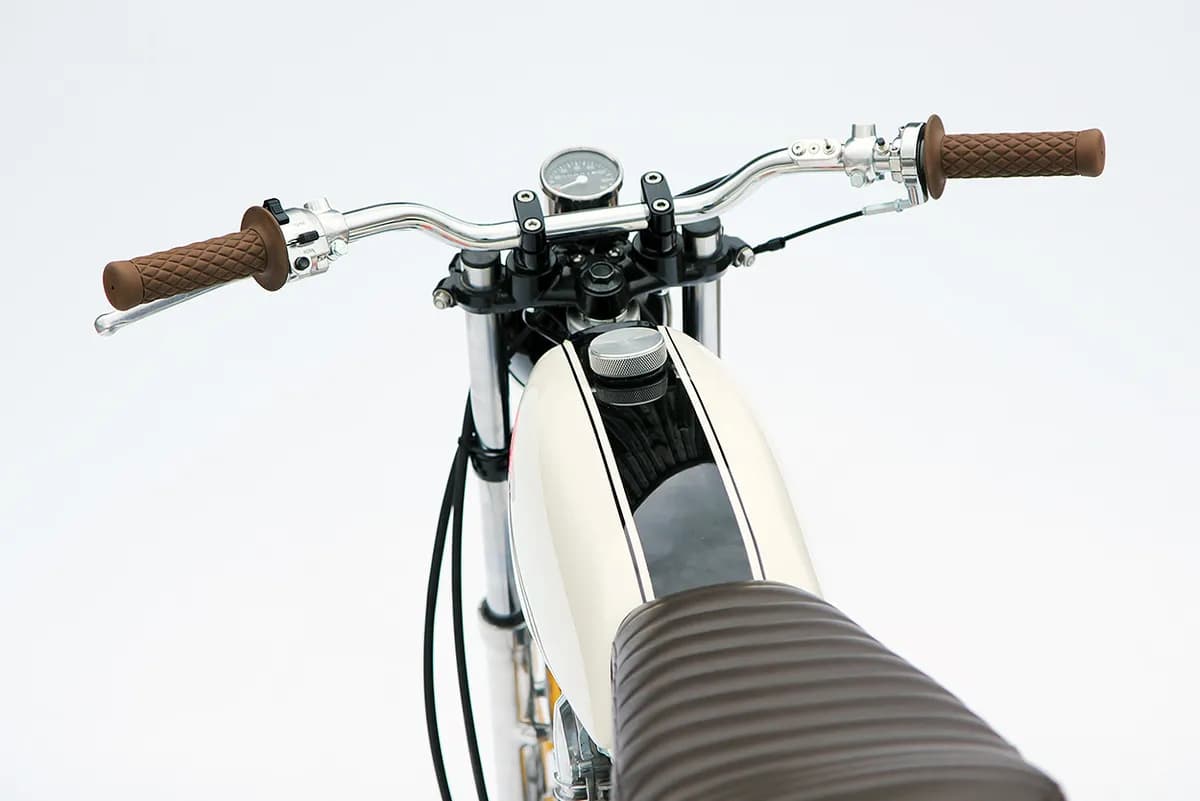
With the stance sorted, it was time to refine the lines. They tried several tanks and chose a slim, tidy Suzuki TS125 unit that had been sitting in the workshop. John modified the mounts and added a knurled stainless cap. The underside of the tank sweeps up towards the headstock, and that's where he placed the key ignition.
The seat is long and flat, trimmed in brown with horizontal stitching, in true tracker style. Underneath, the seat pan has been hollowed out to house the electrics.
Engine and exhaust
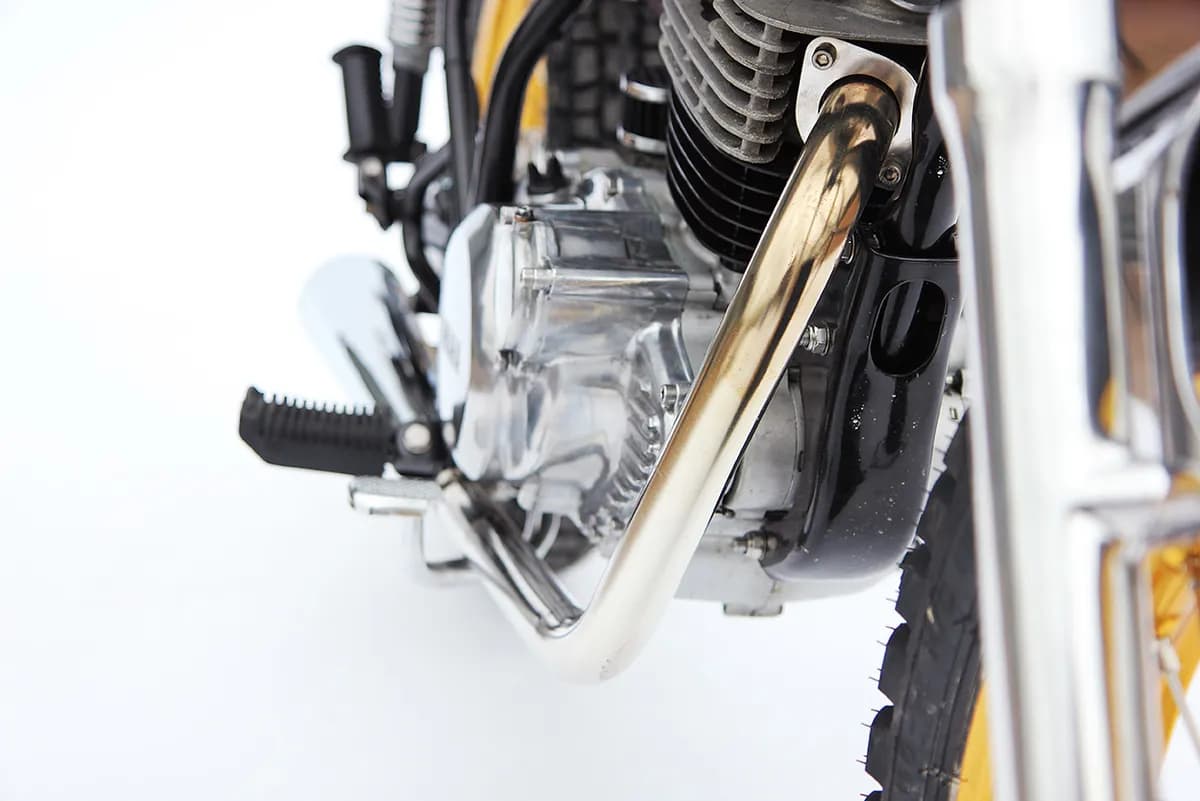
The engine wasn't opened up, but it was freshened: new seals and stainless hardware from end to end, and a Mikuni VM32 carb in place of the original BS34 for a bit more punch. The stainless header pipe is from Jadus and ends in a short silencer that keeps the lines tidy.
Electrics, lights and controls
All the wiring is hidden in the seat pan, including a small, light four-cell Antigravity battery. Up front there are chrome bars with a 2-inch rise, aftermarket levers and Biltwell grips. The left switch comes from a Yamaha FS1E, the legendary seventies British moped, and the rest of the controls are from Posh.
The lights are Bates-style and the 60 mm speedo barely takes up any space. The aluminium fenders are hand-made.
Paint and art
The tank and frame went off for paint: black for the frame and off-white with a black stripe for the tank. The tank art is by Stevie Gee, an artist who's also a proper petrolhead. John sent him the tank with a few reference photos and gave him free rein. The result, a helmeted character next to the CMBL logo, is what finally gave the bike its name.
With gold rims and a brown seat, the whole thing looks elegant and uncluttered. It's a bike made for the city: light, easy and full of style.
Build sheet
| Donor bike | Yamaha SR250 (year not given) |
|---|---|
| Builder | John Eldridge (CMBL) |
| Location | Cornwall, England |
| Client | A London rider |
| Style | Street tracker |
| Subframe | New, about 5 cm higher, with rear loop |
| Rear suspension | 360 mm shocks |
| Rims | 18" anodised aluminium, stainless spokes |
| Tyres | Heidenau |
| Tank | Suzuki TS125 with knurled stainless cap |
| Carburettor | Mikuni VM32 (was BS34) |
| Exhaust | Jadus stainless header and short silencer |
| Electrics | In the seat pan, 4-cell Antigravity battery |
| Controls | Chrome bars with 2" rise, Biltwell grips, Yamaha FS1E switch and Posh controls |
| Lights and gauges | Bates-style lights and 60 mm speedo |
| Tank art | Stevie Gee |
Before you build one
A build like this changes the subframe, suspension, wheels, exhaust and lights. Before you start, check the rules for modified motorcycles where you live, and see our guide to approving modifications in Spain.
Photos and source: BikeEXIF