Losing weight is almost a religion in the cafe racer world. The rockers of the sixties did it too: strip off anything that does not make you faster. A lighter bike accelerates harder, stops sooner, turns in with less effort and looks cleaner. But not everything goes. Here is a practical, part-by-part guide to lightening your bike without compromising safety or running into trouble with the law.
Before you start: scales, a plan and paperwork
Weigh the bike, or at least every part you remove, and write it down. That way you will know which changes are worth it and which only cost money. Make a full plan before you buy anything: many parts are linked (change the headlight and you may change the bracket and wiring too). And bear in mind that in many countries several of these changes count as modifications that must be approved or declared. Check your country's rules before you cut anything; our homologation section explains the basics.
Battery: the easiest win
A lead-acid battery is surprisingly heavy for its size. A lithium one (usually LiFePO4) weighs a fraction of the original and is much smaller, so you can hide it under the seat hump or in a small box and leave the frame triangle open. Two things to watch: buy one with enough capacity for your starter motor, and use a lithium-compatible charger. Also check that your bike's regulator charges within the range the battery maker asks for. This change rarely needs any paperwork.
Exhaust: kilos of steel you do not need
The stock exhausts on many classic bikes are heavy, with thick steel silencers. A thin-wall stainless system or a more compact silencer can save a fair amount of weight. Be careful: in most countries the exhaust must be approved for road use (look for the E mark in Europe) and meet noise limits. A freer-flowing exhaust usually means re-jetting the carburettors as well.
Headlight, tail light and indicators
A smaller headlight, compact LED indicators and a discreet tail light save weight and, above all, clean up the bike's lines. You can ditch the bulky stock brackets at the same time. Make sure every light is road approved and fitted at the positions and distances your local rules require.
Subframe and brackets
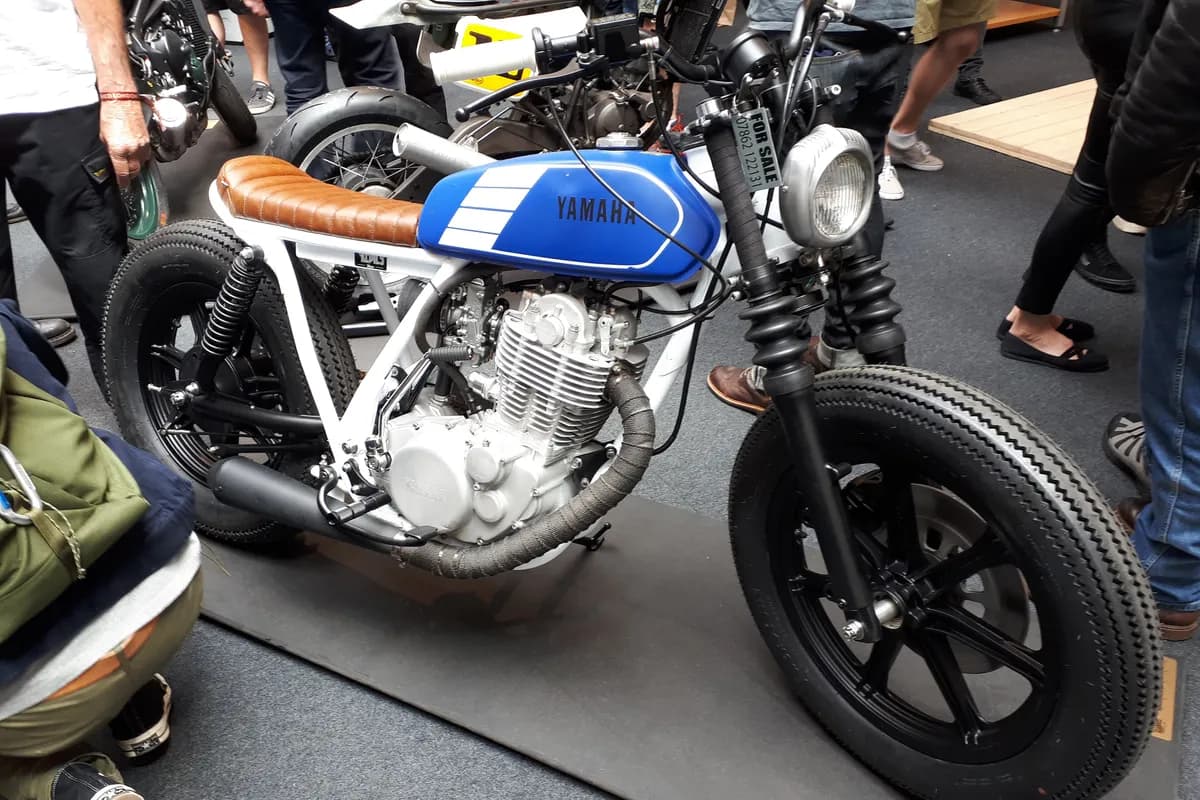
The stock subframe is usually designed for two people, luggage and a huge seat. Shortening it and finishing it with a U-shaped hoop is one of the classic cafe racer moves, and pre-bent hoops ready to weld are easy to buy. You can also remove tabs and brackets you no longer use. But beware: some brackets are structural, and a poor weld can be dangerous. If you cannot weld well, leave this job to a professional. In many countries a cut subframe must be inspected or declared, so check first.
Mudguards, tank and seat
Steel mudguards can be replaced with aluminium or fibreglass ones, or shortened. Do not overdo the rear one: besides keeping water off you, it often carries the number plate and tail light. An aluminium or fibreglass tank saves weight and defines the look of the bike. If you choose fibreglass, make sure it is designed for today's ethanol-blended fuel. As for the seat, a single-seat hump in fibreglass or aluminium with thin padding weighs far less than a stock foam-and-steel seat.
Wheels: where you feel it most
Wheel weight is unsprung weight, and it also spins. That is why every kilo you save there is felt more than anywhere else: the bike accelerates, brakes and changes direction more easily. On spoked bikes, swapping chromed steel rims for aluminium rims is a classic upgrade. Carbon wheels exist, but their price puts them out of reach for most builds. If you change rim or tyre sizes, check whether your local rules require approval.
Wiring and small details
Rewiring the bike with a simpler loom, compact switchgear and a modern ignition unit gets rid of cables, relays and boxes you no longer need. Other details add up too: the centre stand, grab rails, pillion pegs if the bike becomes a single-seater, indicator brackets and plastic covers. Clip-on bars may also count as a modification in some countries. And if you replace the airbox with pod filters, you will need to rejet.
What not to touch
Home-drilling discs, pads or sprockets was once a fashion, but it makes no sense today: you can weaken parts your life depends on. If you want lighter discs or sprockets, buy parts made that way. And never touch the main frame or downgrade the brakes to save a few grams. Safety comes first.
With a plan and some patience, you can take a good number of kilos off a classic bike; exactly how many depends a lot on the starting model. Get inspired by the projects in our builds section. How many kilos have you taken off yours?
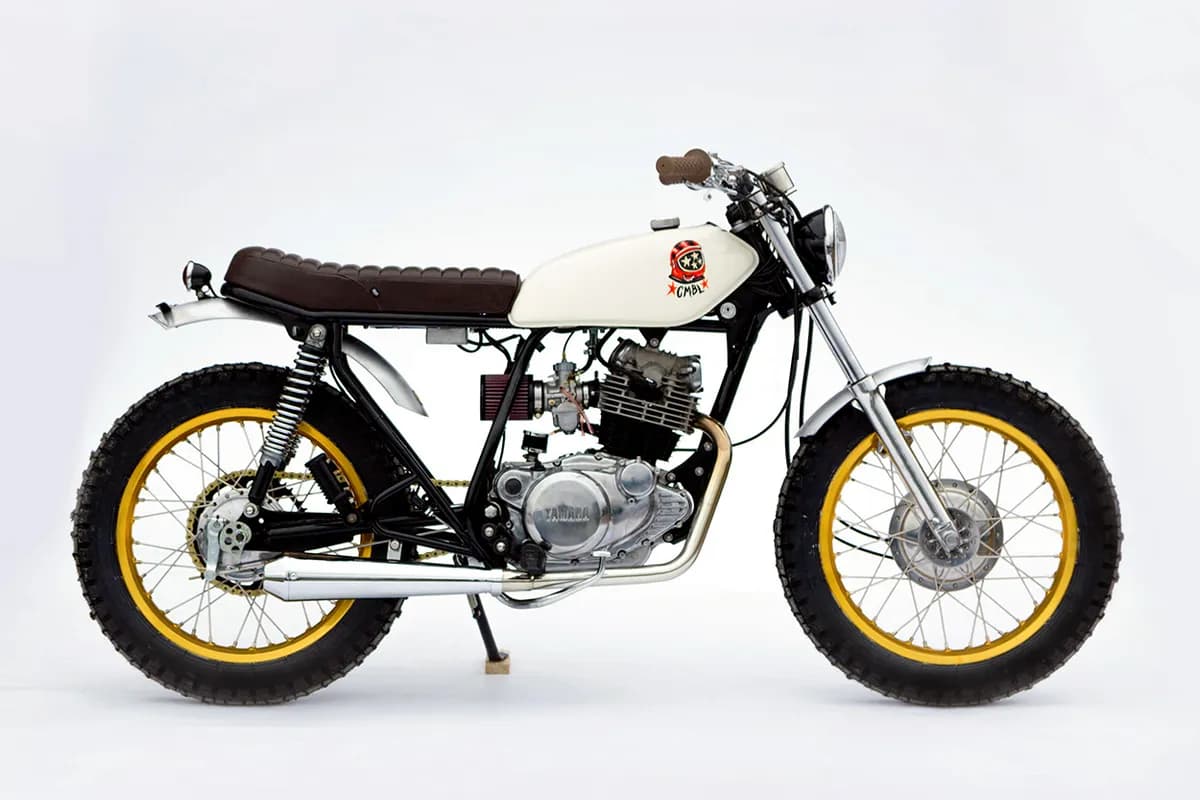
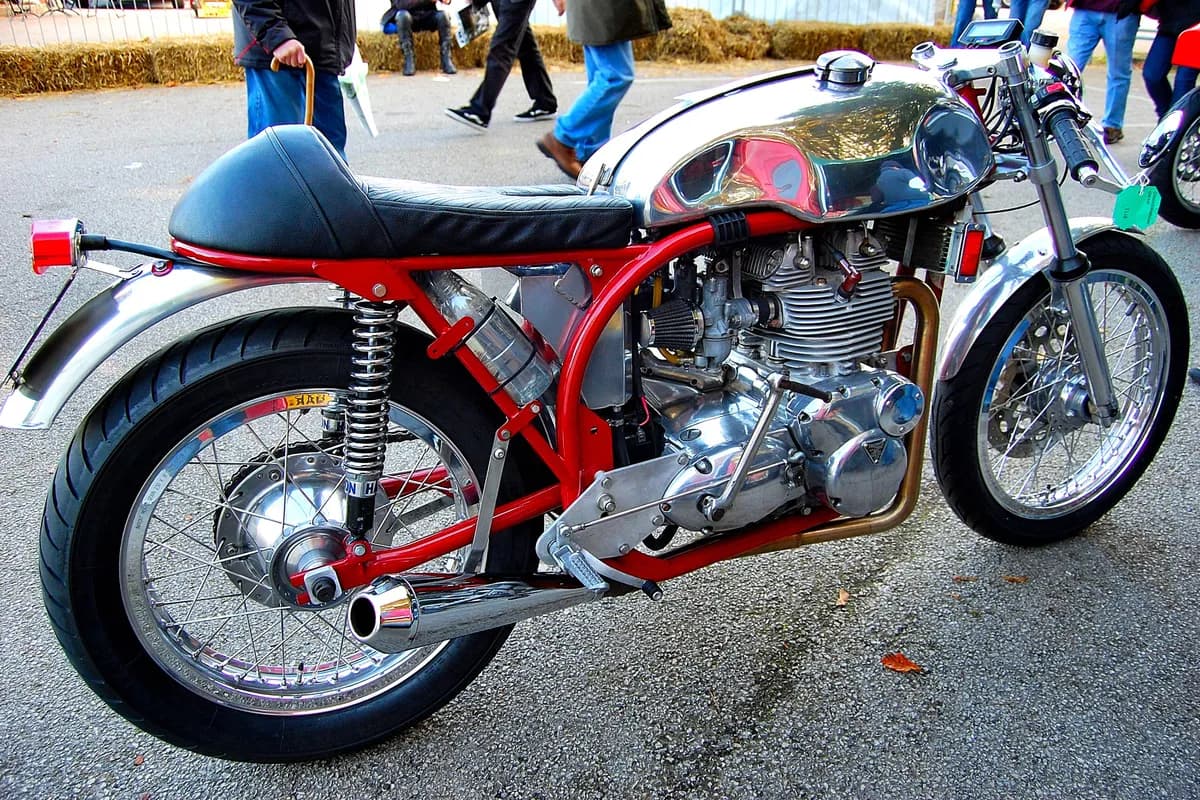
Photos: cover, Ronald Saunders (CC BY-SA 2.0); Yamaha brat, RedMax Speed Shop (CC BY-SA 2.0). Wikimedia Commons.