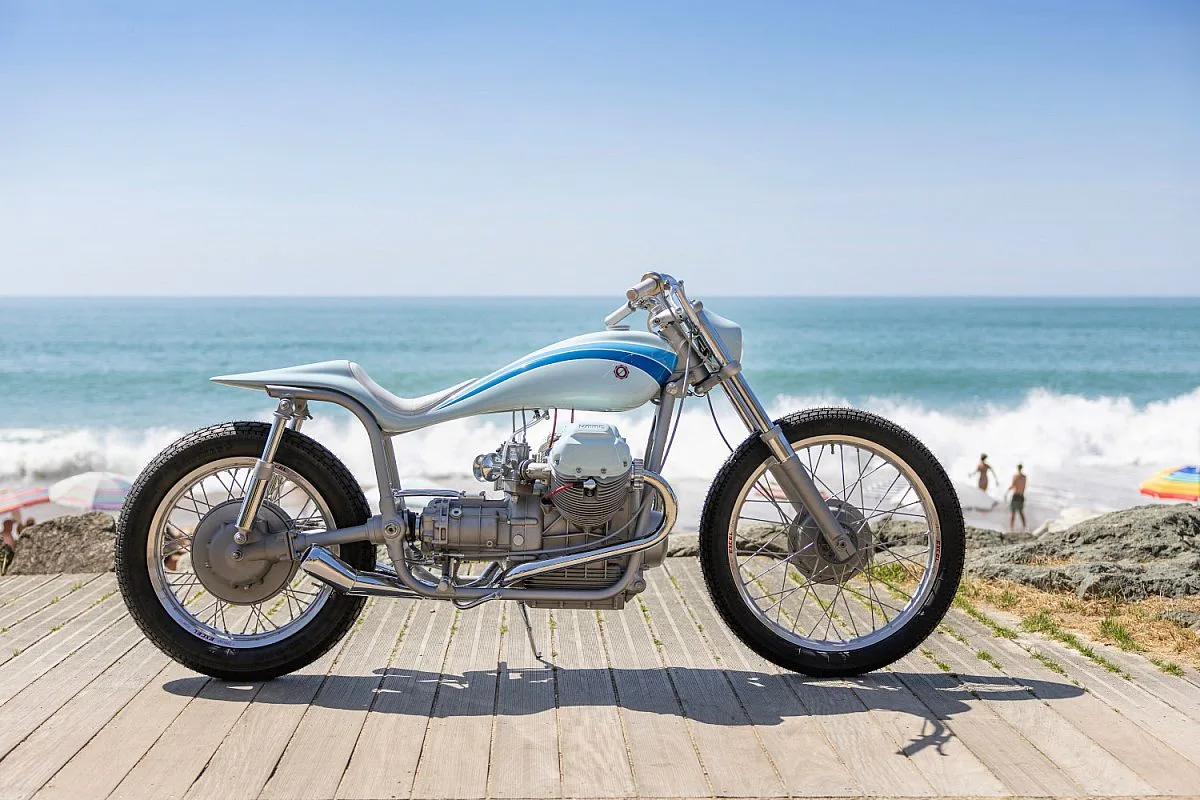
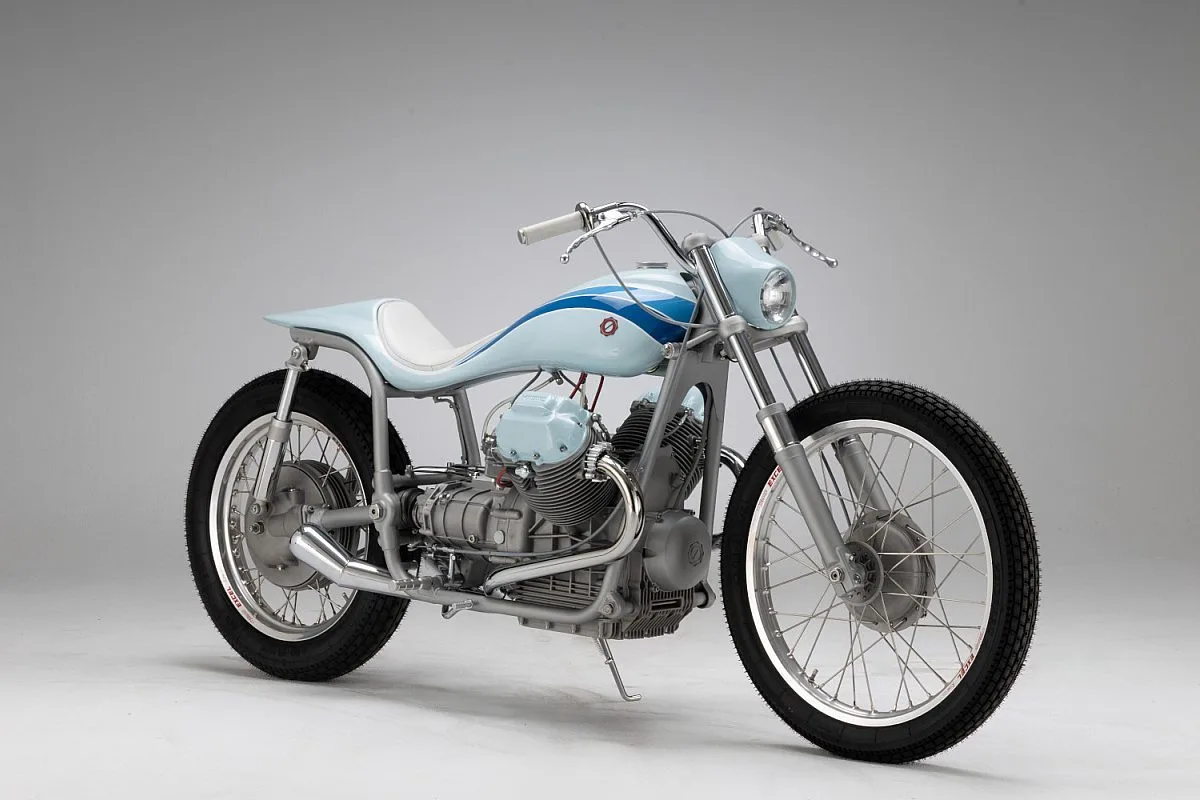
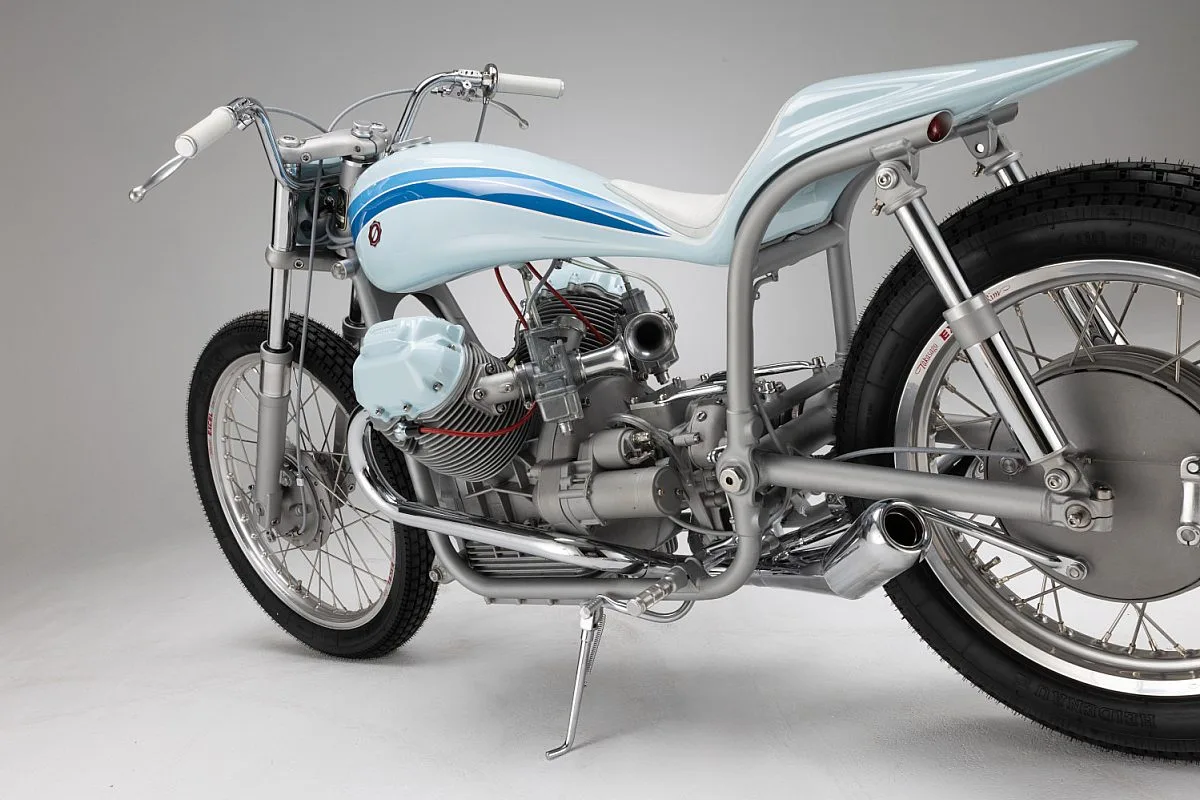
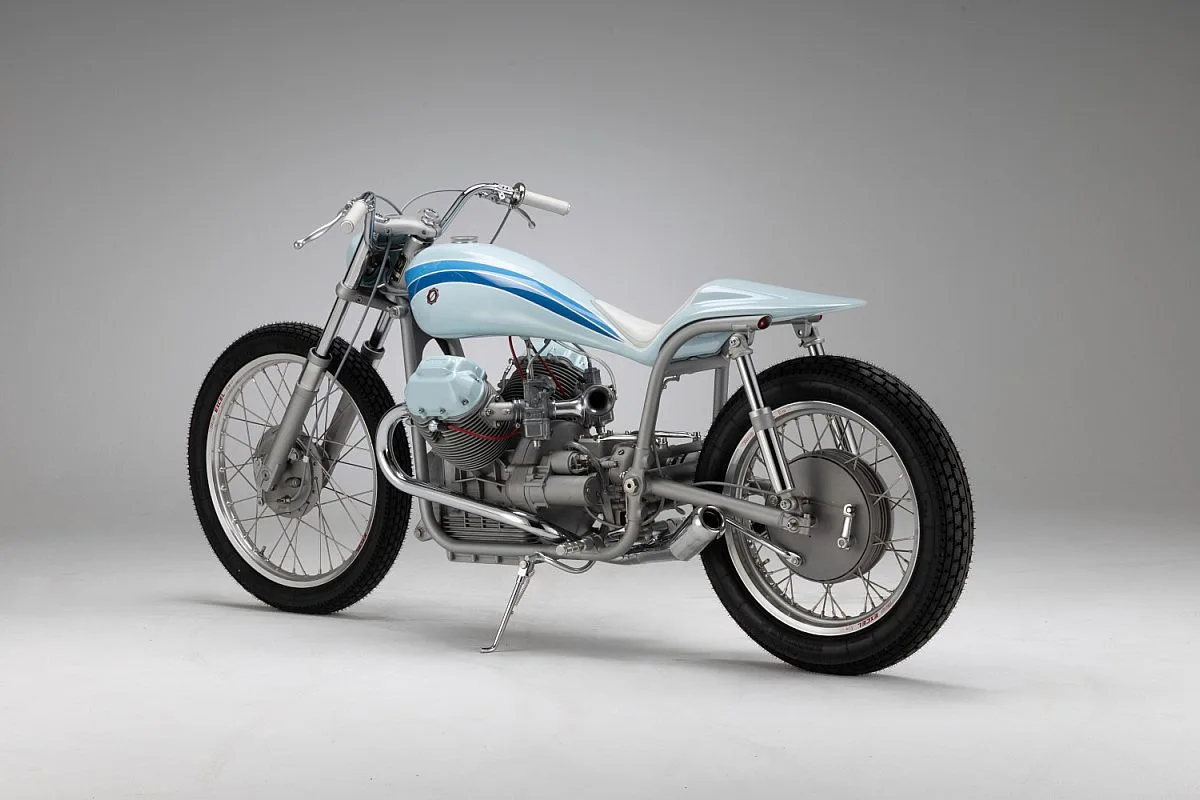
When a 1970s Moto Guzzi V7 goes through Kaffeemaschine's workshop, it comes out unrecognizable. «Bonanza» is build number 51 from the Hamburg shop and one of the most radical V7s we've seen: a 3D-printed body, an 850 cc engine and barely 159 kg ready to ride.
A workshop that blends craft and digital design
Kaffeemaschine is the workshop run by Axel Budde in Hamburg, in a 330-square-meter hall devoted to rebuilding classic Moto Guzzis. Its method combines traditional hand work with computer-aided design (CAD) and additive manufacturing, in other words 3D printing, and that mix is what makes its bikes recognizable.
Where «Bonanza» comes from
The idea appeared while modifying the geometry of the donor frame. The new steering angle and the main tube changed the look of the bike so much that its builder was reminded of a cross between a tracker, a dragster and a chopper. That brought to mind the Bonanza bicycles of the 1970s, and hence the name.
The base is a Moto Guzzi V7 Special, the European version of the 750 Ambassador sold in the United States. Stock, it was a comfortable, indestructible tourer of 757 cc, around 45 hp and 245 kg: sturdy, but heavy.
What they did to it
- Engine and gearbox: after modifying the frame, a Moto Guzzi 850T engine with its gearbox was fitted, thoroughly overhauled. It has electronic ignition, a lightened flywheel and open carburetors with velocity stacks, and makes around 70 hp.
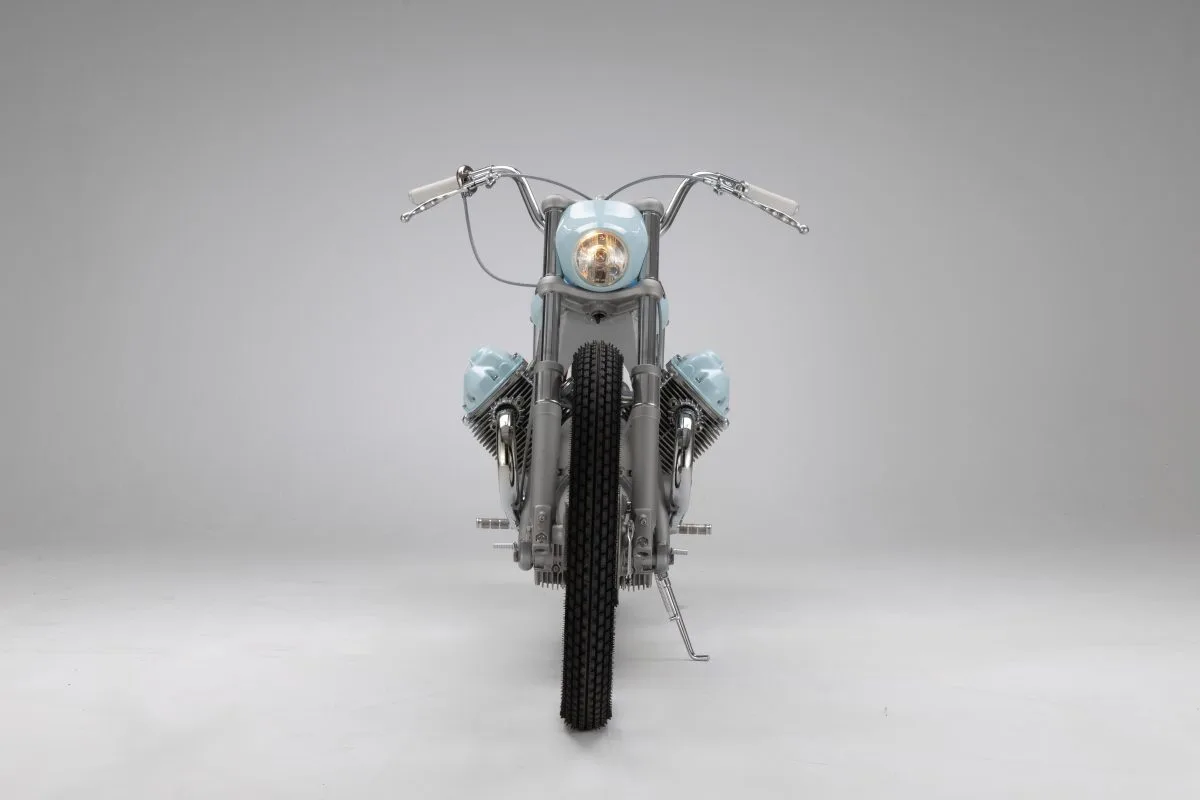
- 3D-printed covers: the engine covers were custom designed and printed, to give the classic V-twin a modern look.
- One-piece body: this is the standout. Designed in CAD and printed in a carbon-fiber-reinforced composite, it runs the length of the bike from the tank to the seat and ends in a flat-track-style tail. All the electronics are hidden underneath, and the battery sits in the small pocket in the tail.
- Front end: a modified telescopic fork from a Le Mans 1, with a drum brake hub from a Yamaha XT, lightweight Excel rims and flat-track Heidenau tires.
- Headlight and controls: a printed headlight shroud that matches the engine covers, a headlight and a minimal Motogadget dash. The bars are scrambler-style, swept back in a V for an upright riding position.
- Finish: in a world of black customs, this one has almost no black, except the tires. The frame, swingarm and triple clamps are sandblasted and bead-blasted in a matte metallic tone; there is chrome on the headers, bars and fork legs, and the body is light blue with blue stripes.
Spec sheet
| Donor bike | Moto Guzzi V7 Special (757 cc, around 45 hp, 245 kg) |
|---|---|
| Builder | Kaffeemaschine (Axel Budde), Hamburg, Germany |
| Name | «Bonanza», build no. 51 |
| Engine | Overhauled Moto Guzzi 850T, electronic ignition, lightened flywheel, open carburetors |
| Power | Around 70 hp |
| Weight | 159 kg ready to ride (86 kg less than the donor) |
| Body | One piece, 3D-printed in carbon-fiber-reinforced composite |
| Wheels | Excel rims with flat-track Heidenau tires |
What we like and what gives us pause
The most interesting thing about «Bonanza» is the number: taking 86 kg off a 245 kg bike is a huge transformation, and you don't get there with minor tweaks. We also think it's a smart move that the body is a single piece joining tank, seat and tail, and that the color dares to go with light blue and bare metal.
The doubts are the usual ones for a show bike. A frame with different steering geometry, open carburetors and a printed body are brilliant solutions on a show-floor bike, but hard to bring onto the street without a lot of paperwork.
What about Spain? What would need homologating
If you were thinking of something similar on a bike registered here, these are the modifications that usually need a procedure at the ITV (Spain's roadworthiness inspection), always depending on the case and what appears on the registration sheet:
- Frame modifications, such as a change of geometry or steering angle.
- Swapping the engine for a larger-displacement one.
- Replacing the body and seat, and relocating electrical components and the battery.
- Wheels, tires, front brake and suspension different from the originals.
- The lighting system and the open carburetors, which affect the approval of the whole bike.
This is indicative information and does not replace the judgment of the ITV station. If you're preparing a V7, see our Moto Guzzi V7 guide (in Spanish), look at how homologation of modifications works or tell us about your bike.
Fun fact: it's for sale
When the original story was published, «Bonanza» was still for sale. It had its public debut at the Wheels & Waves Artride exhibition.
Source and credits
Bike built by Kaffeemaschine. The story of this project was originally published by Bike EXIF. This article is our own summary and commentary.