
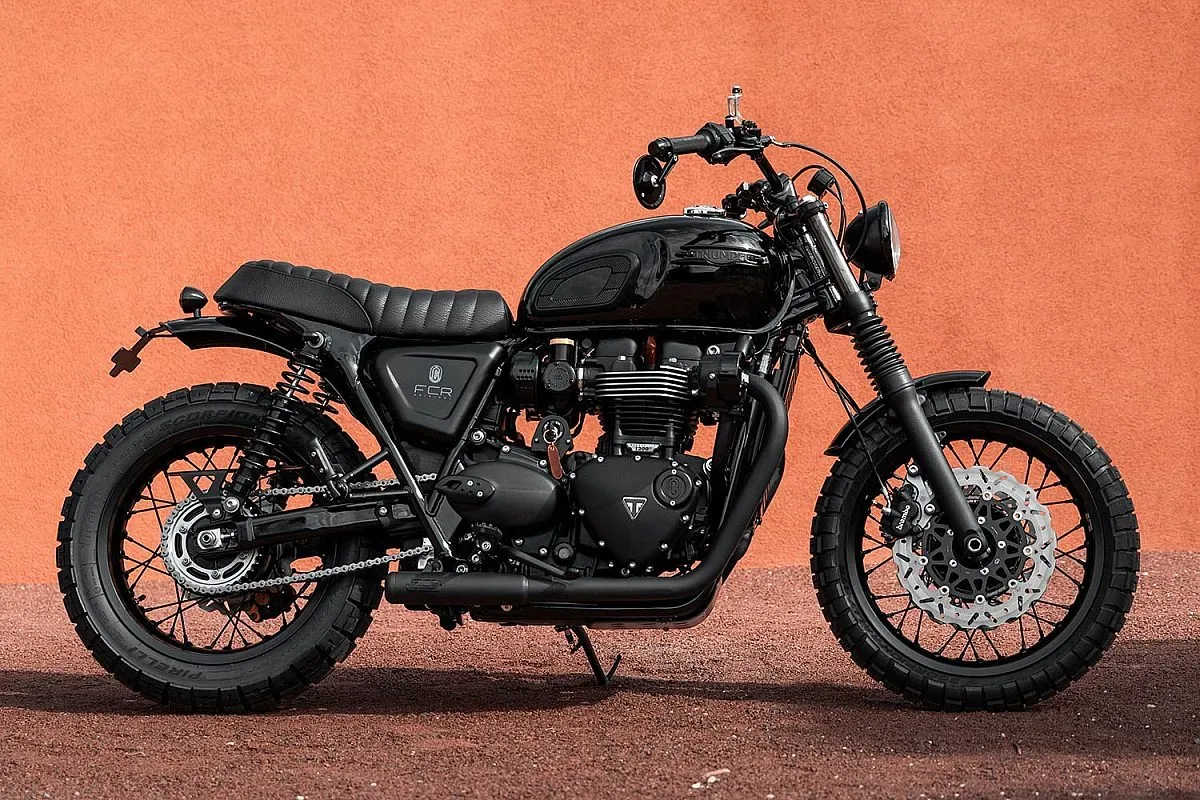
Almost everyone who considers a custom asks the same thing: if I modify the bike, do I lose the warranty? The French workshop FCR Original has built its business on that doubt. It starts from new, unregistered bikes and transforms them while keeping the manufacturer's official warranty. Its latest creation is a Triumph Bonneville T120 Black turned into a very understated scrambler.
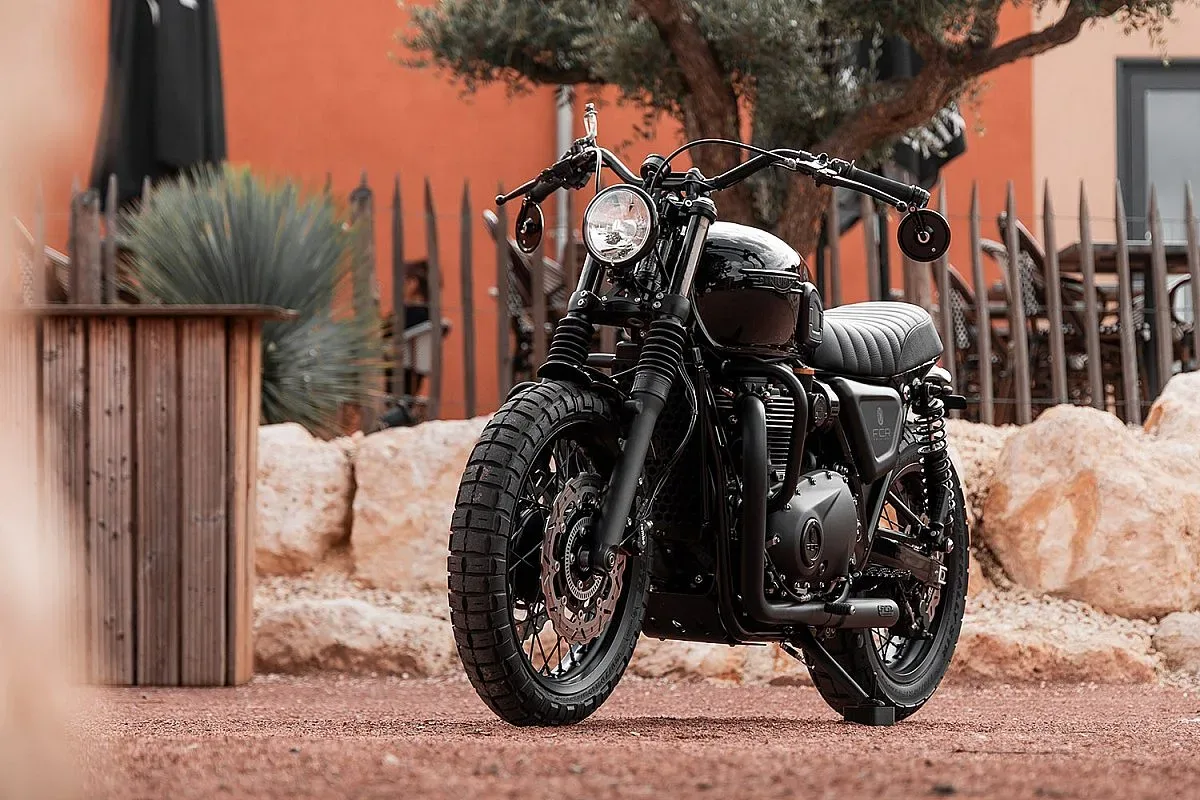
A workshop that lives off the new bike
FCR Original works in Chauvigny, in west-central France, and makes around 40 customized bikes a year. All of them start from a new, untouched production bike, and the workshop says each one keeps the full two years of the manufacturer's warranty. It's a very different approach from the typical garage project with a used donor: here you buy the bike, it's transformed and it's delivered ready to ride.
A client's commission: Stéphane
This T120 is the commission of a client named Stéphane. The brief was clear: a bike that's discreet at first glance but loaded with details up close. It isn't a radical reinvention, but what the workshop itself describes as a highly calculated redesign, where every part has a reason to be there.
What they did to it
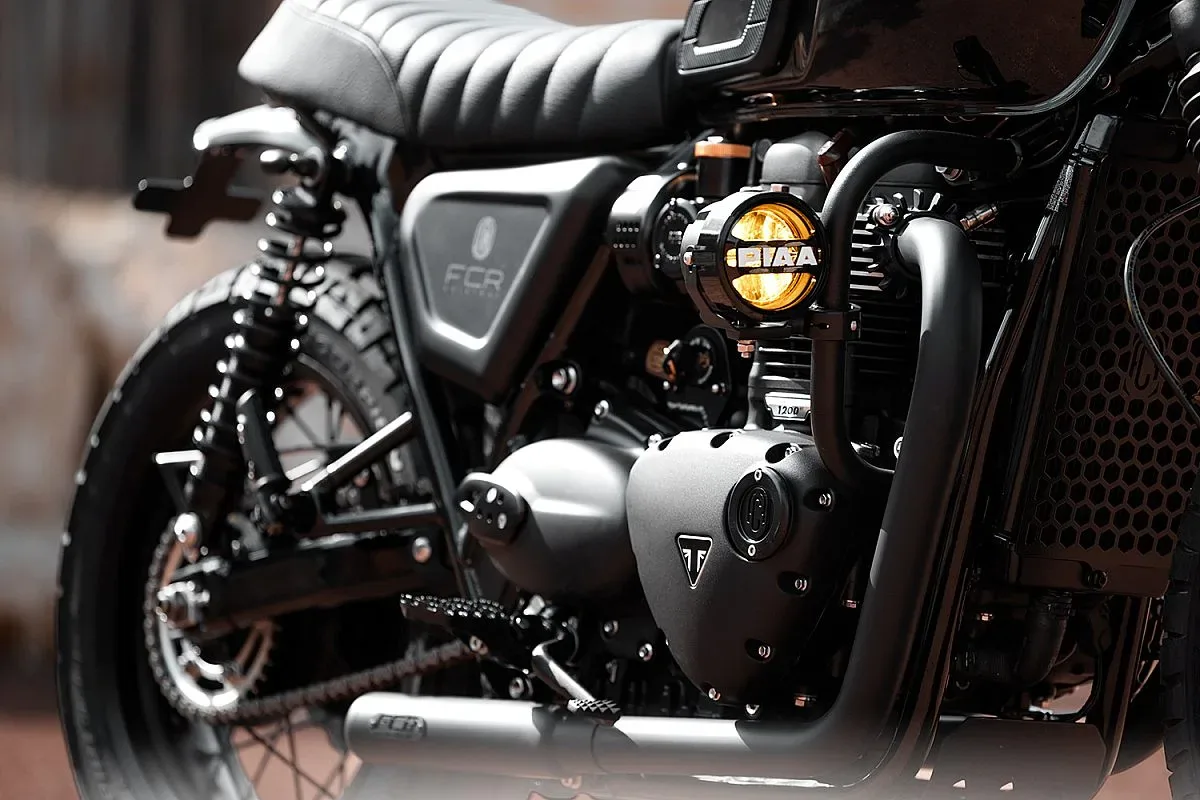
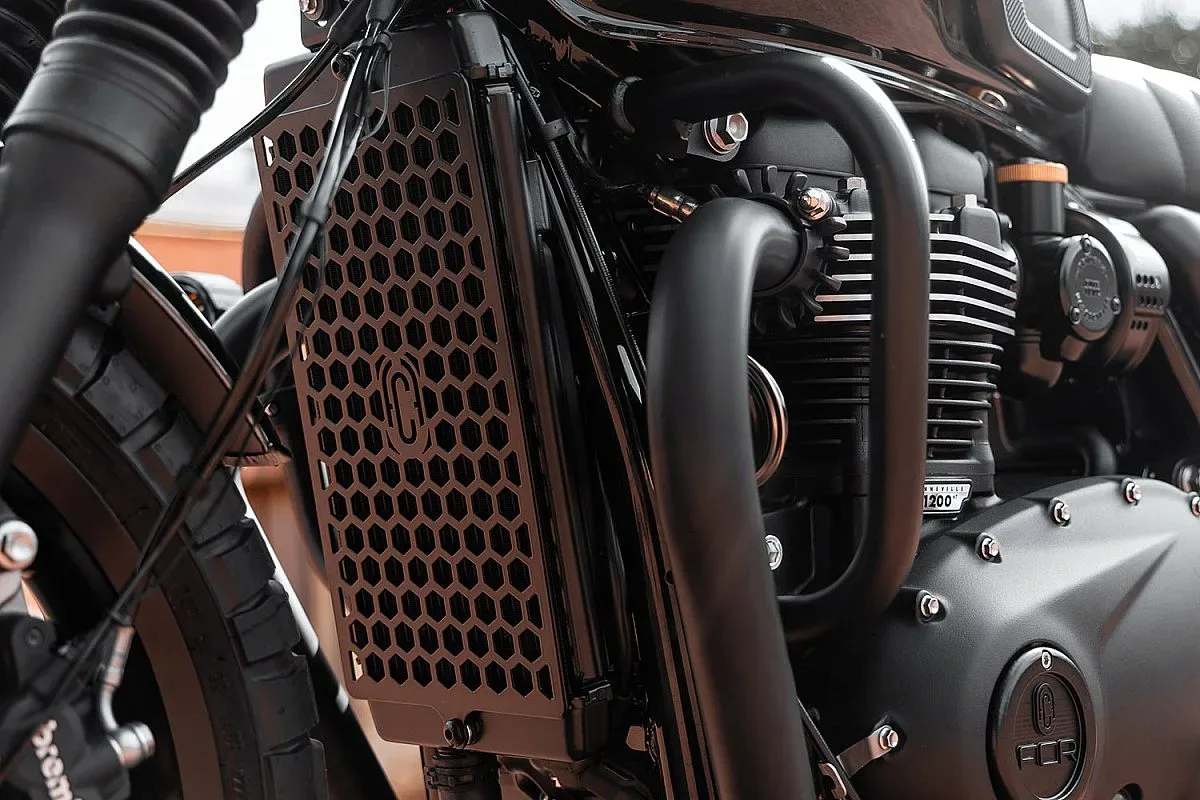
- Engine: the liquid-cooled 1,200 cc twin stays stock inside. The exhaust changes: FCR Original's own design, shorter and slimmer, made so it doesn't scrape the ground.
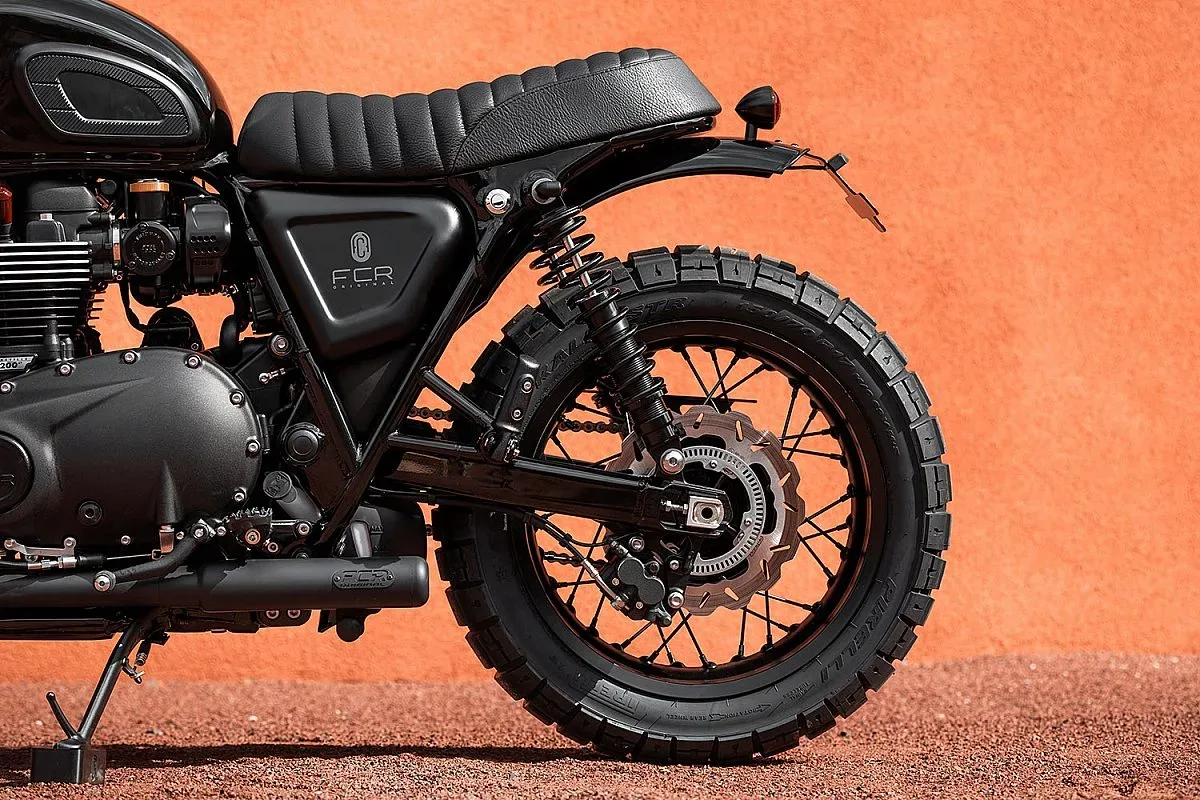
- Subframe: the rear one has been reworked to tighten the proportions without losing the strength needed to carry a passenger.
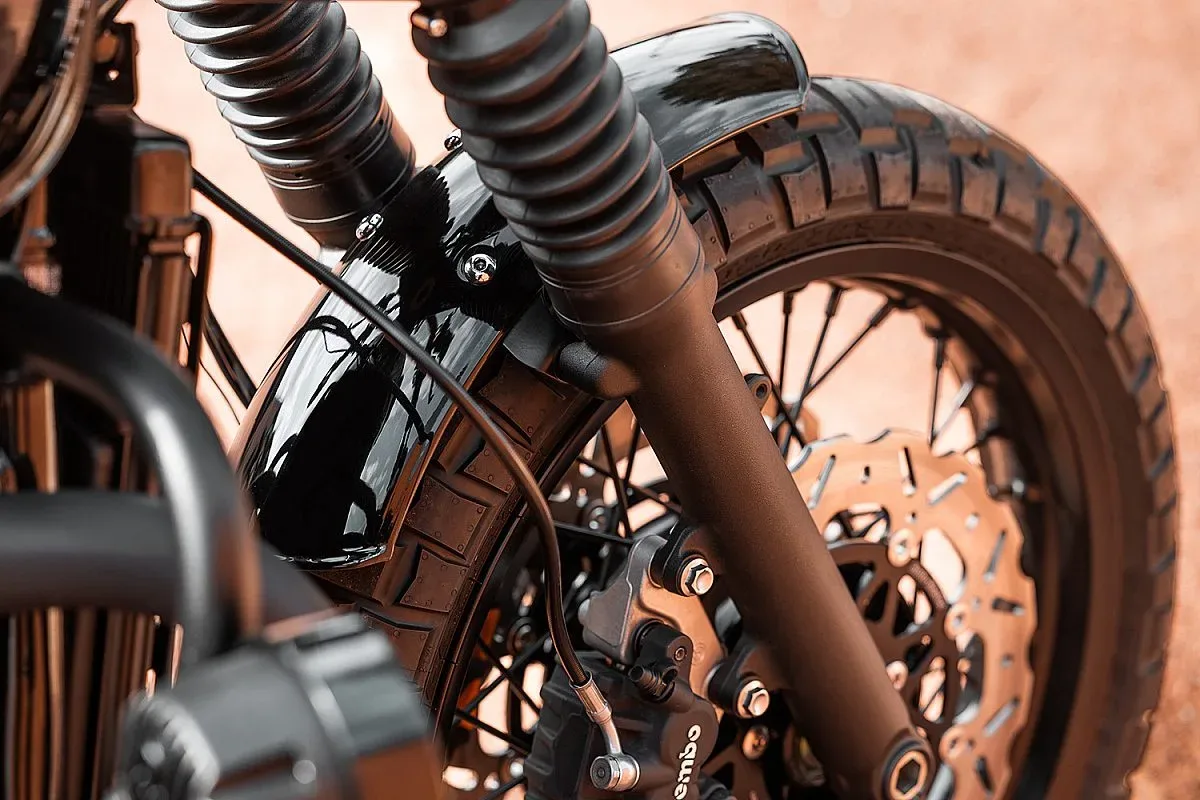
- Suspension: the stock forks have been overhauled and their stanchions carry a black DLC treatment. At the back, fully adjustable Shock Factory 2Win shocks.
- Wheels and tires: custom black rims, 18 inches in front and 17 at the back, with Pirelli Scorpion Rally STR dual-sport tires.
- Brakes: three Moto-Master Wave discs improve on what it had stock.
- Seat and paint: a new seat in black faux leather. Tank and aluminum fenders in deep gloss black, satin side covers and gunmetal gray FCR logos.
- Lights: a Bates headlight and taillight, a yellow PIAA LP530 auxiliary lamp on the right-hand crash bar and Motogadget mo.blaze turn signals at the ends of the handlebars.
- Dash and controls: a Motogadget Tiny speedometer on a custom bracket, Motone button blocks and Motogadget mo.view mirrors. The wiring keeps CAN bus compatibility and doesn't generate error codes.
- Handlebars: black 22 mm bobber-style bars with Dakar grips, and SW-Motech footpegs.
- Protection: its own engine guard and crash bar.
Spec sheet
| Base bike | New Triumph Bonneville T120 Black (liquid-cooled 1,200 cc twin) |
|---|---|
| Builder | FCR Original (Chauvigny, France) |
| Warranty | Two years from the manufacturer, according to the workshop |
| Engine | Stock inside, with FCR Original's own exhaust |
| Suspension | Stock fork with black DLC stanchions and adjustable Shock Factory 2Win shocks |
| Wheels | Black rims, 18" front and 17" rear, Pirelli Scorpion Rally STR |
| Brakes | Three Moto-Master Wave discs |
| Dash and lights | Motogadget Tiny, Bates headlight and taillight, mo.blaze turn signals |
What we like and what gives us pause
We like the coherence: the whole bike plays with different shades of black, from the shine of the tank to the satin of the side covers, and that makes it elegant without shouting. We also like the care taken with the electronics, because keeping the CAN bus error-free is one of the least showy and hardest parts to get right on a modern bike.
The doubt is the one that applies to any bike that depends on a warranty: it's worth reading what it covers and what it doesn't. A dual-sport tire and a trimmed subframe change how the bike behaves, and the fine print rules. The price isn't published either, so it's hard to judge whether the approach pays off.
What about Spain? What would need homologating
If you did something similar with a Bonneville registered here, these are the modifications to check before you start, always depending on the case and what appears on the registration sheet:
- Subframe: shortening or modifying it affects strength and the passenger seat.
- Wheels and tires: new sizes and dual-sport tires different from those on the sheet.
- Suspension: shock absorbers and fork stanchions different from the originals.
- Exhaust: noise and emissions must stay within the legal limits.
- Headlight, turn signals and taillights: approved and fitted where the regulations say, including turn signals at the ends of the handlebars.
This is indicative information and does not replace the judgment of the ITV station (Spain's roadworthiness inspection). If you have a Bonneville, see our Triumph Bonneville guide, find out how homologation of modifications works or tell us about your bike (all in Spanish). Another Bonneville with a scrambler character: the Macco Motors T100.
Source and credits
Bike built by FCR Original. The story was originally published by Bike EXIF. This article is our own summary and commentary.