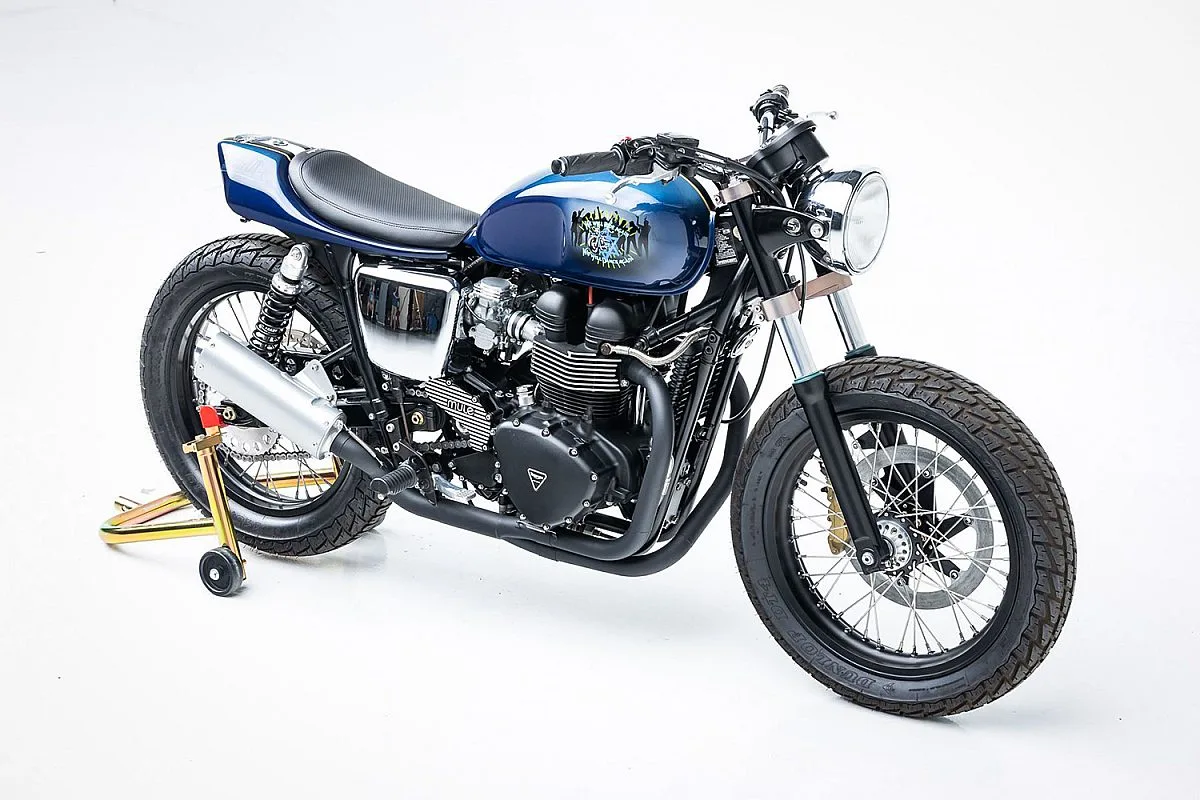
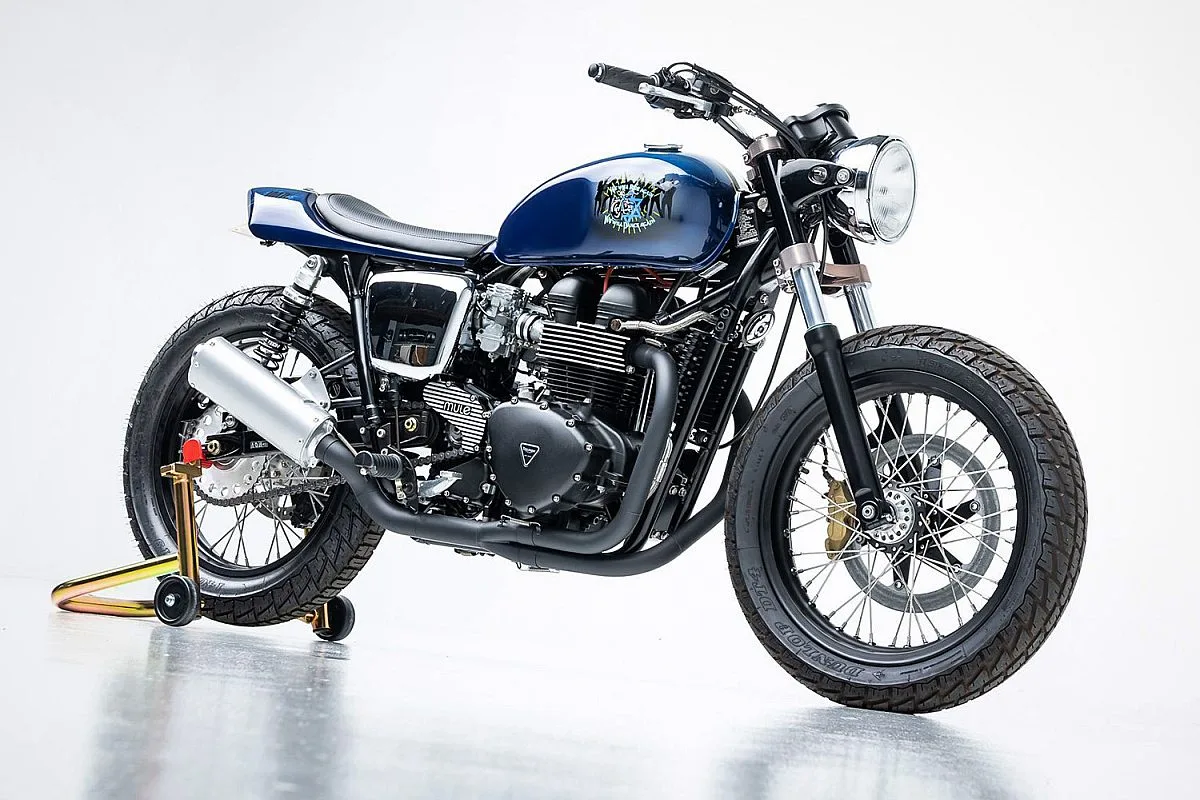
Richard Pollock of Mule Motorcycles is the kind of builder who puts function first: nothing on his bikes is there for show, and every part is exactly where it needs to be. By his own account, this Triumph Bonneville street tracker is a mild build compared to his usual work. But there is a twist: it is a bike he built himself more than ten years ago, which has come back to him and now returns to the road as a tribute.
A bike that comes home
It all started with a call from a customer in Ohio who wanted a proper street tracker, based on either a Harley-Davidson Sportster or a Triumph. Pollock convinced him the Bonneville was the right choice, and he also knew where to find the perfect donor: a 2007 Triumph Bonneville Black that Mule had already built more than a decade earlier. After passing through several owners, the bike had ended up in Boise, Idaho, the very city Pollock had just moved to.
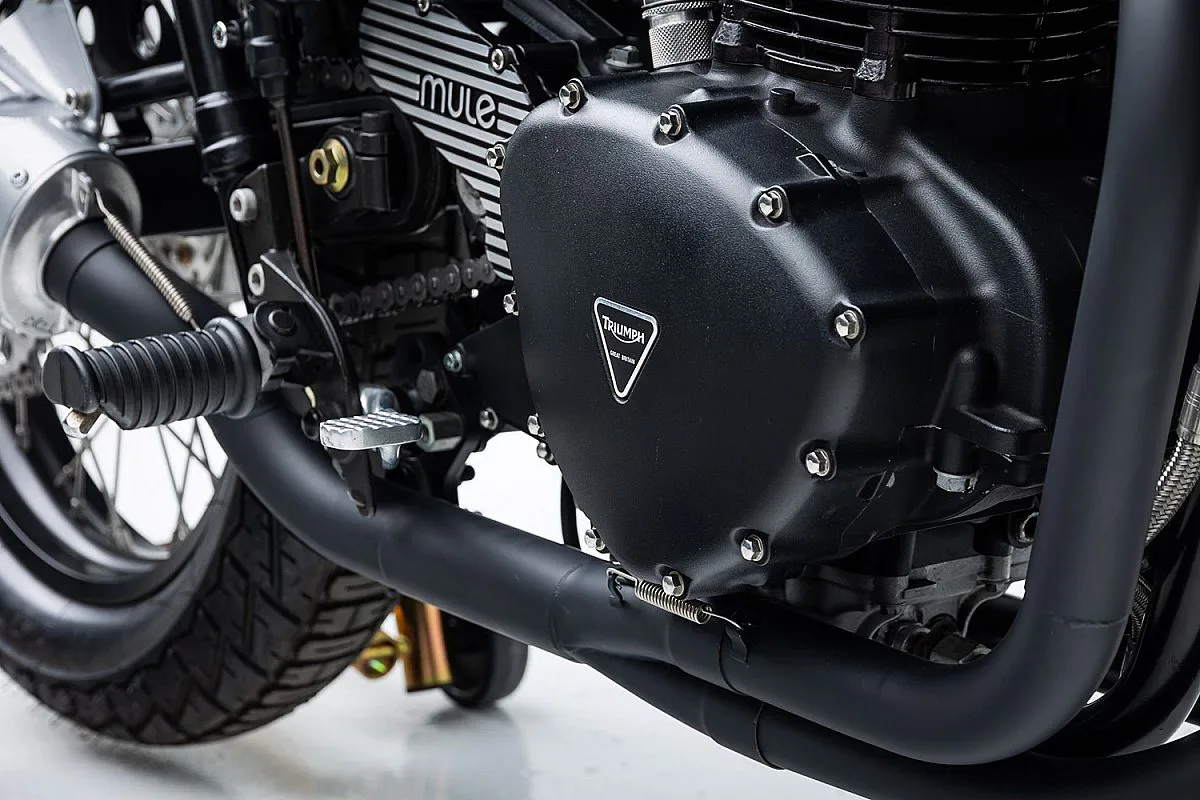
A deal was struck with the owner and the Triumph went back to the workshop, with one problem: it would not start. Pollock loaded it into his van anyway, trusting his gut. The culprit was the ignition pickup coil, a part Triumph no longer makes. He found one from an Italian eBay seller and paired it with a programmable ignition module, which adds around 800 rpm at the top and a much sharper advance curve to the blacked-out parallel twin.
19-inch wheels and a Buell fork
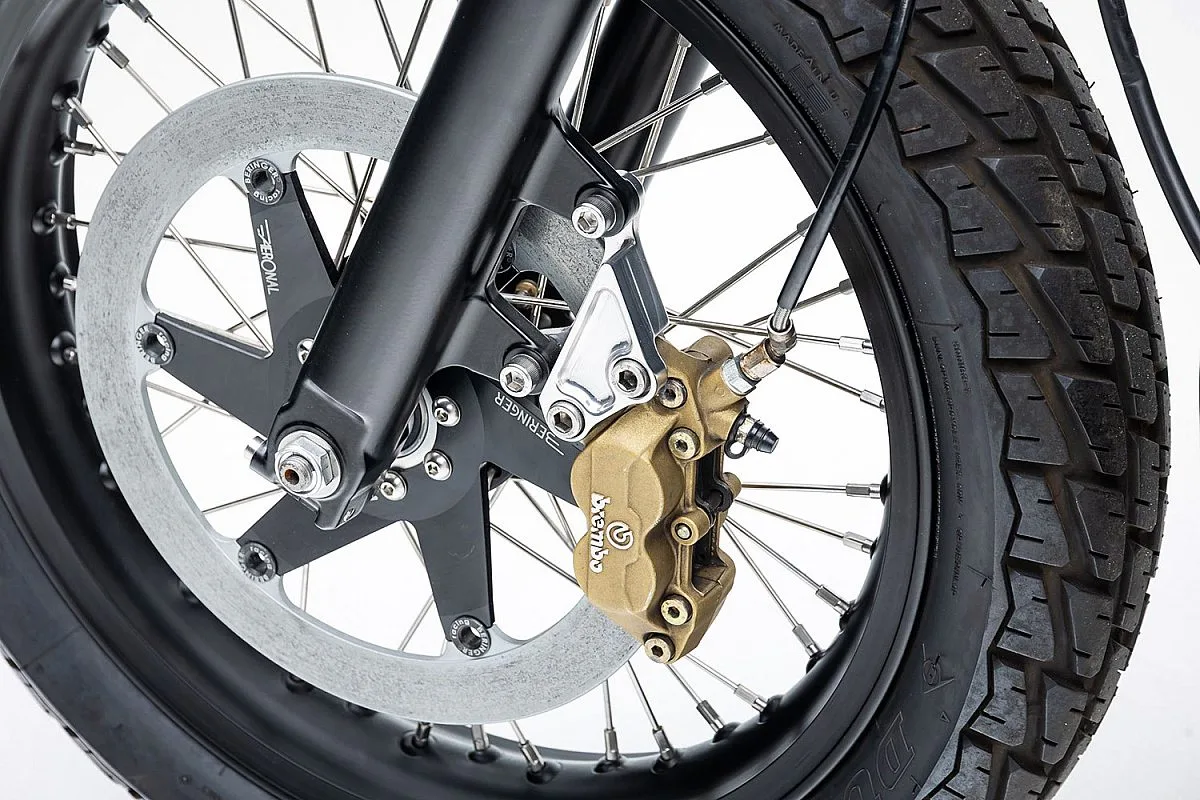
In its first version the bike ran 18-inch wheels, which don't suit a classic tracker silhouette today. Pollock took the wheels apart and re-laced them with 19-inch rims and Dunlop DT4 tires. The front hub deserves a closer look: it is a custom narrow Barnes-style center hub, with custom outer bearing carriers too. The floating rotor is from Beringer, and Kosman supplied the bracket for the four-piston Brembo caliper.
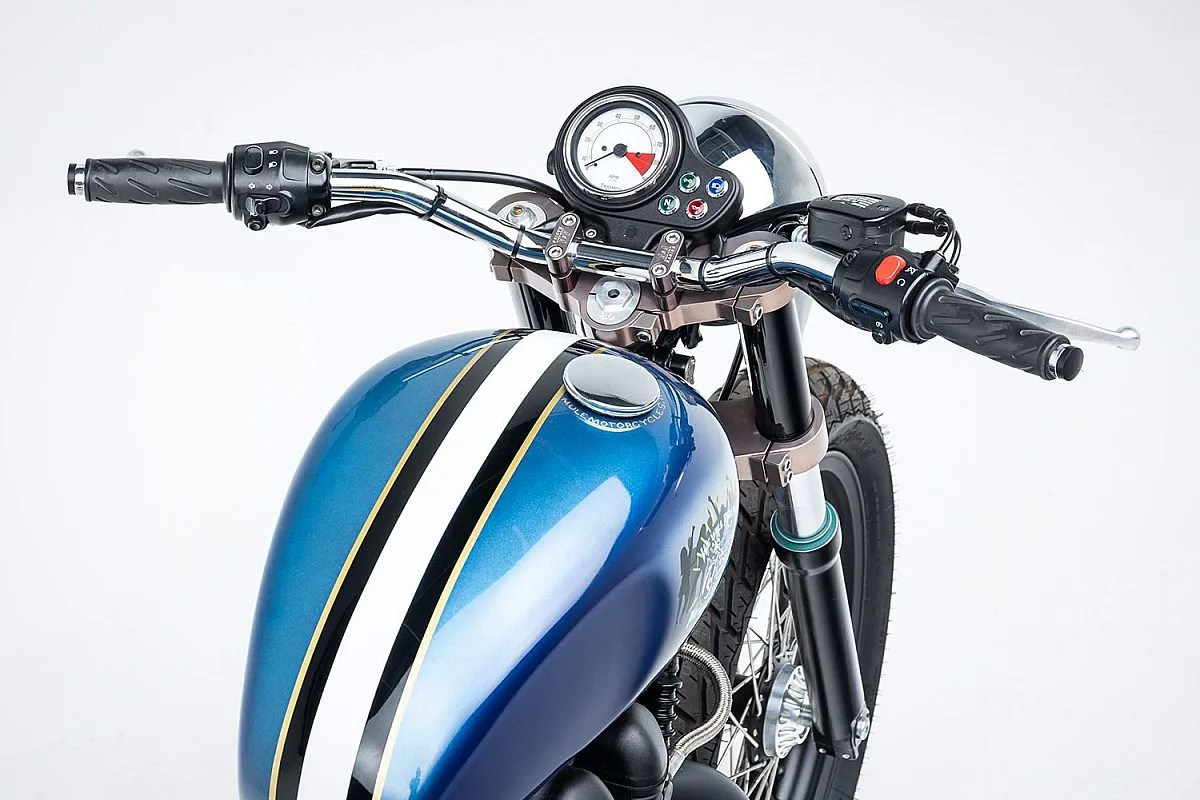
The front end was already Mule's work and didn't need changing: custom triple clamps holding powder-coated Buell M2 Cyclone fork legs, with independent compression and rebound adjustment in each leg. The stainless handlebar, with a dirt-track bend, is also made in-house. The controls are stock, but the dash is now a KOSO GPS speedometer, which needs no sensors or wires to the wheel; Pollock says it is now his go-to choice. The photos still show the original Triumph tachometer, which was replaced after the shoot.
A shorter tail
Most of the work happened at the back. The Bonneville's subframe is long to carry a two-up seat, so Pollock cut most of it away and made a new, very clean rear hoop. A pair of Race Tech shocks now holds up the rear, and the rear hub carries another disc carrier made by Mule. The tracker tail is from First Klass Glass, and Pollock rushed the bike to Corbin's headquarters in Hollister, California, where the seat was upholstered in a single day.
A hand-painted tribute
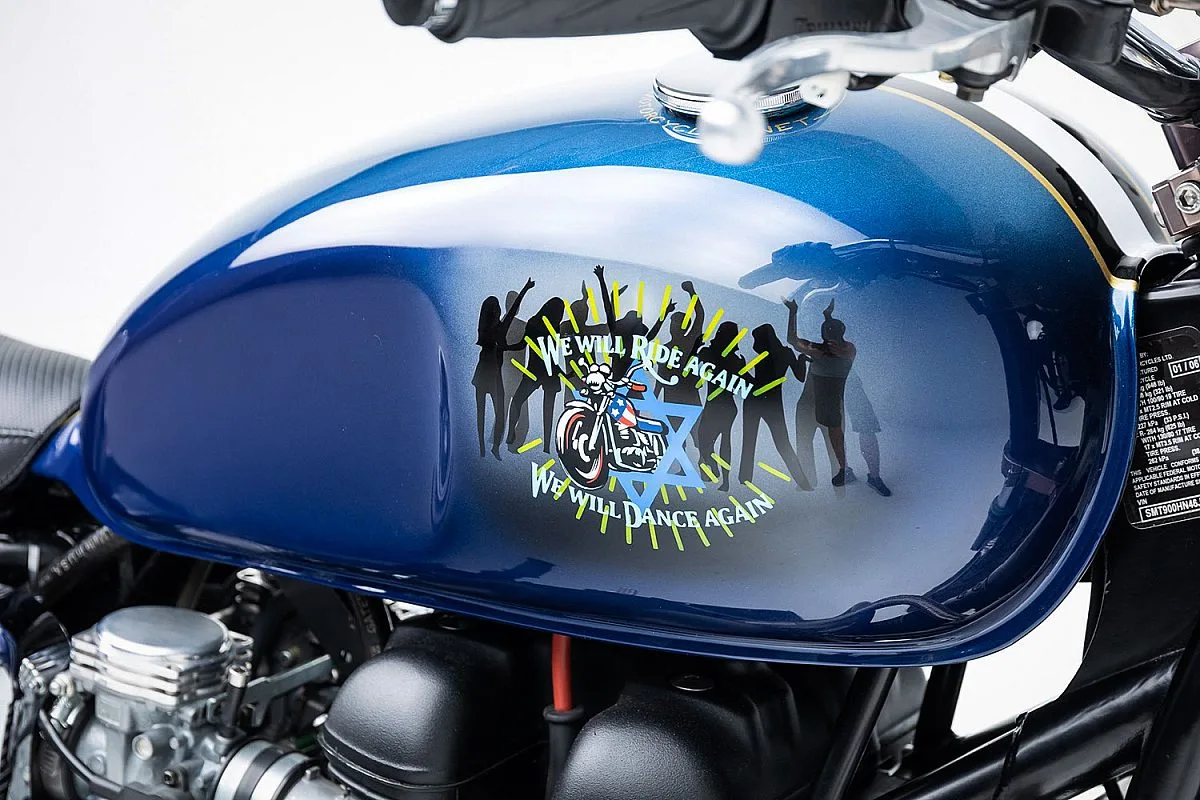
There was a deadline: a large Jewish Motorcycle Alliance gathering in Cleveland at the end of July. Above all, the bike was commissioned as a tribute to the victims of the October 7 attack on the Nova music festival, which called for very detailed airbrushing on the stock tank and the tail. The work was done by Irene Cosmos, an airbrush artist from San Diego, with the finish by Tony Lalicatta. Some details look like stickers under the clear coat, but it is all paint.
The finishing touches
- Exhaust: the previous one earned the last owner a chat with the Boise police, so Pollock bent up a new 2-into-1 system ending in a reworked DG muffler.
- Side covers: chrome, to match the other shiny parts.
- Turn signals: tiny, they almost disappear when you see the bike from the side.
- Right side: Mule's own cover plates replace the bulky stock sprocket cover, and custom blanking plugs take the place of the passenger pegs.
Mule thanks Chuck Connell for his help with fabrication and Meg Williams, whom he calls "the queen of detailing".
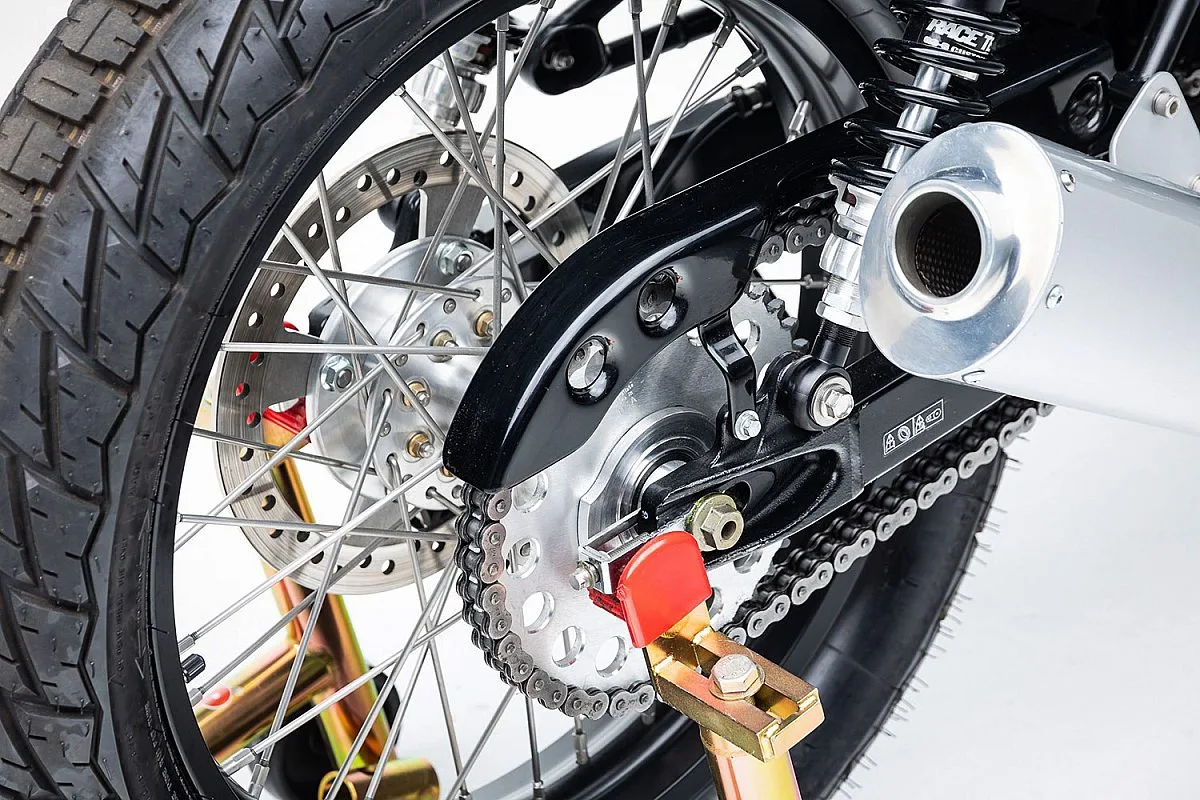
Pollock developed most of these parts years ago, when he built around 30 custom Bonnevilles. Since then stock has run out, suppliers have gone and he has sold some manufacturing rights. This bike has brought back his appetite for the second-generation Bonneville, and he has started making some of those parts in-house again.
Spec sheet
| Donor bike | 2007 Triumph Bonneville Black (air-cooled parallel twin) |
|---|---|
| Builder | Richard Pollock, Mule Motorcycles (Boise, Idaho, USA) |
| Ignition | New pickup coil and programmable module |
| Fork | Buell M2 Cyclone with custom triple clamps, adjustable compression and rebound |
| Shocks | Race Tech |
| Wheels | Spoked 19" rims, custom Barnes-style front hub, Dunlop DT4 |
| Brakes | Beringer floating rotor, four-piston Brembo caliper on a Kosman bracket |
| Seat | First Klass Glass tail, upholstered by Corbin |
| Exhaust | Custom 2-into-1 with DG muffler |
| Paint | Airbrushed by Irene Cosmos, finished by Tony Lalicatta |
What we like and what gives us pause
We like that it is a build you notice in the "how" more than in the "what": every part that came off was replaced by a better one, with top-quality fasteners and brackets. And we like how the story ends: the owner, a collector, planned to display it at home, but after the first ride he hasn't stopped using it. A tribute you ride says more than one behind glass.
What gives us pause: the paintwork is very personal and closely tied to its story, so this is not a bike for everyone. And with so many chassis changes, copying it in Spain would need paperwork for almost everything.
What about Spain? What would need homologating
If you wanted to build something similar on a Bonneville registered in Spain, these are the modifications that usually need approval at the ITV, always depending on each case and on what the vehicle's technical file says:
- Subframe: cutting it and closing it with a new hoop changes the structure and, going to a single seat, the technical file.
- Suspension: a fork from another brand with custom clamps, and the new shocks.
- Wheels and tires: the move to 19 inches and the new tires.
- Exhaust: a hand-made 2-into-1 needs noise and emissions approval.
- Handlebar: the new one, with its height and width.
- Turn signals and lights: approved and fitted where the regulations say.
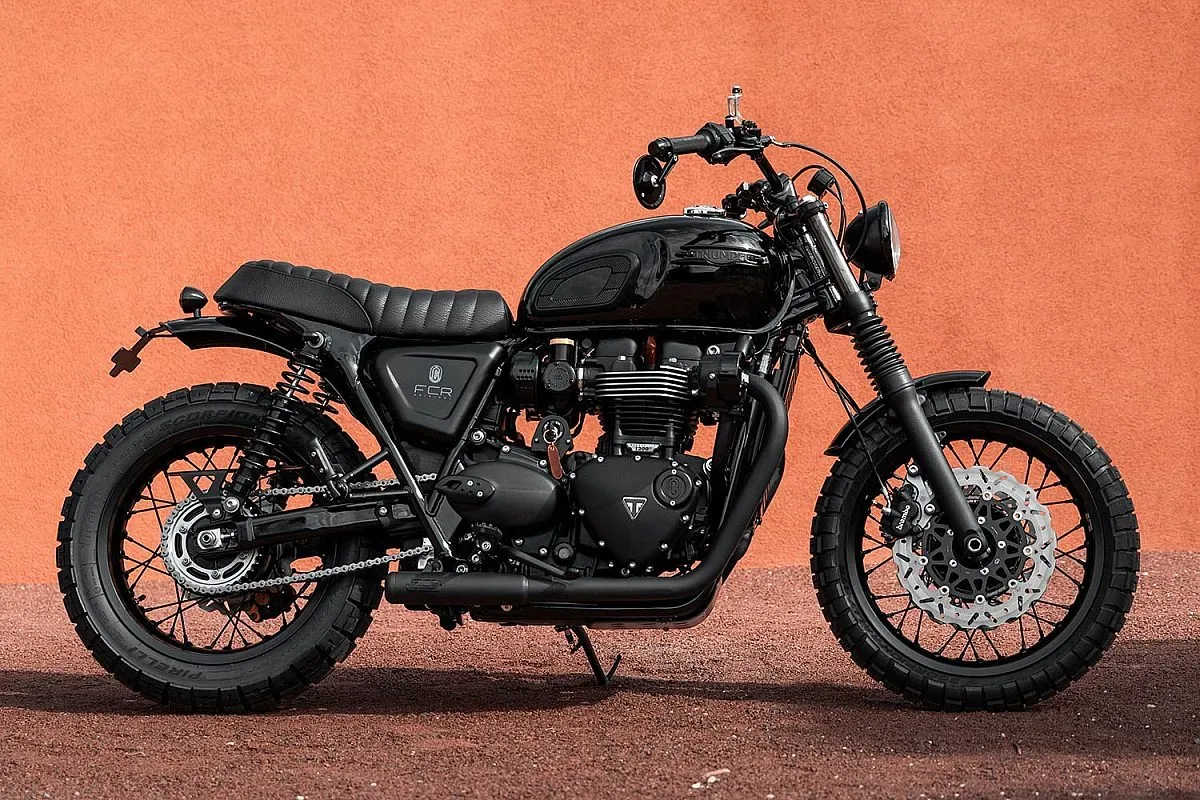
This is indicative information and does not replace the judgment of the ITV station (Spain's roadworthiness inspection). If you have a Bonneville, see our Triumph Bonneville guide, find out how homologation of modifications works or tell us about your bike (all in Spanish). Other bikes you might like: the FCR Original T120 scrambler and the Garuda Machina Royal Enfield Hunter 350 tracker.
Source and credits
Bike built by Richard Pollock (Mule Motorcycles). Photos: Bart Cepek. The story was originally published by Dean Larson on Bike EXIF. This article is our own summary and commentary.