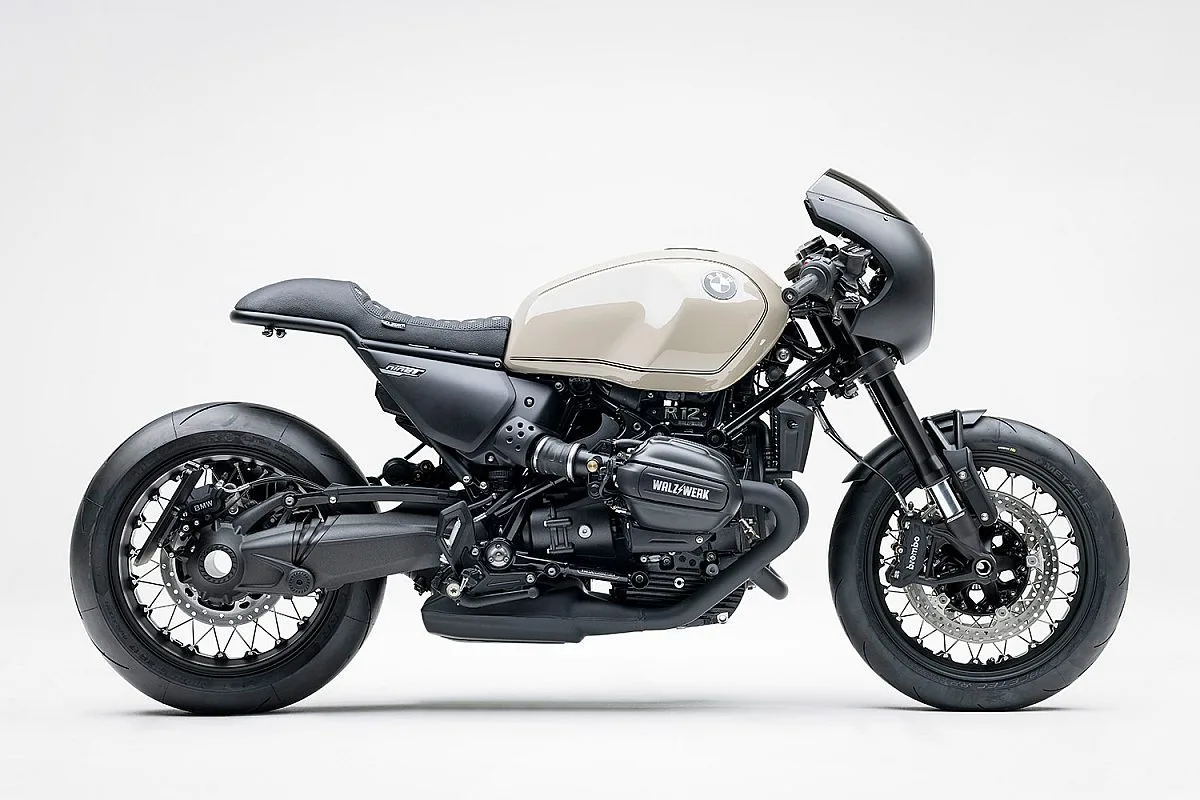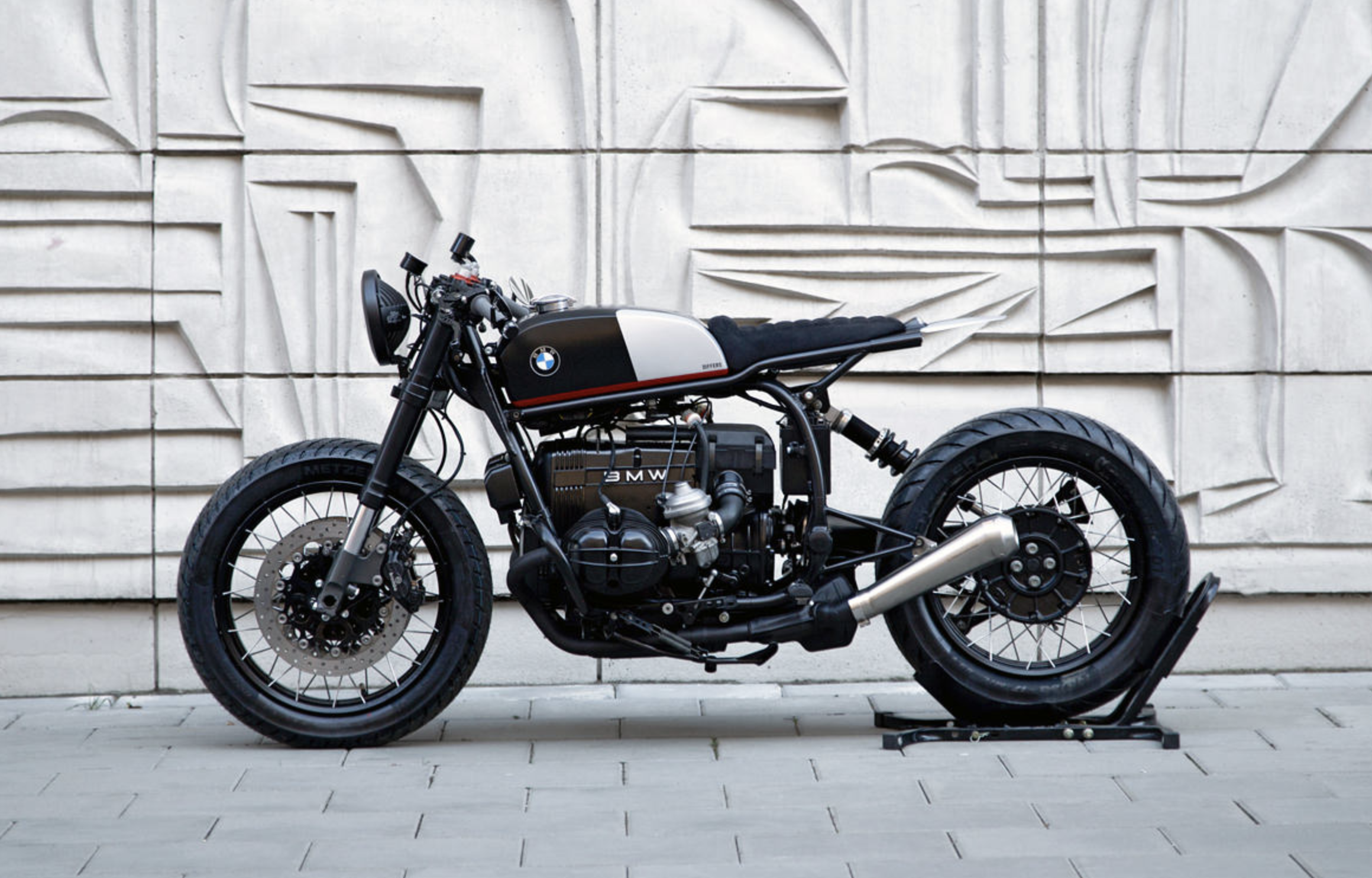
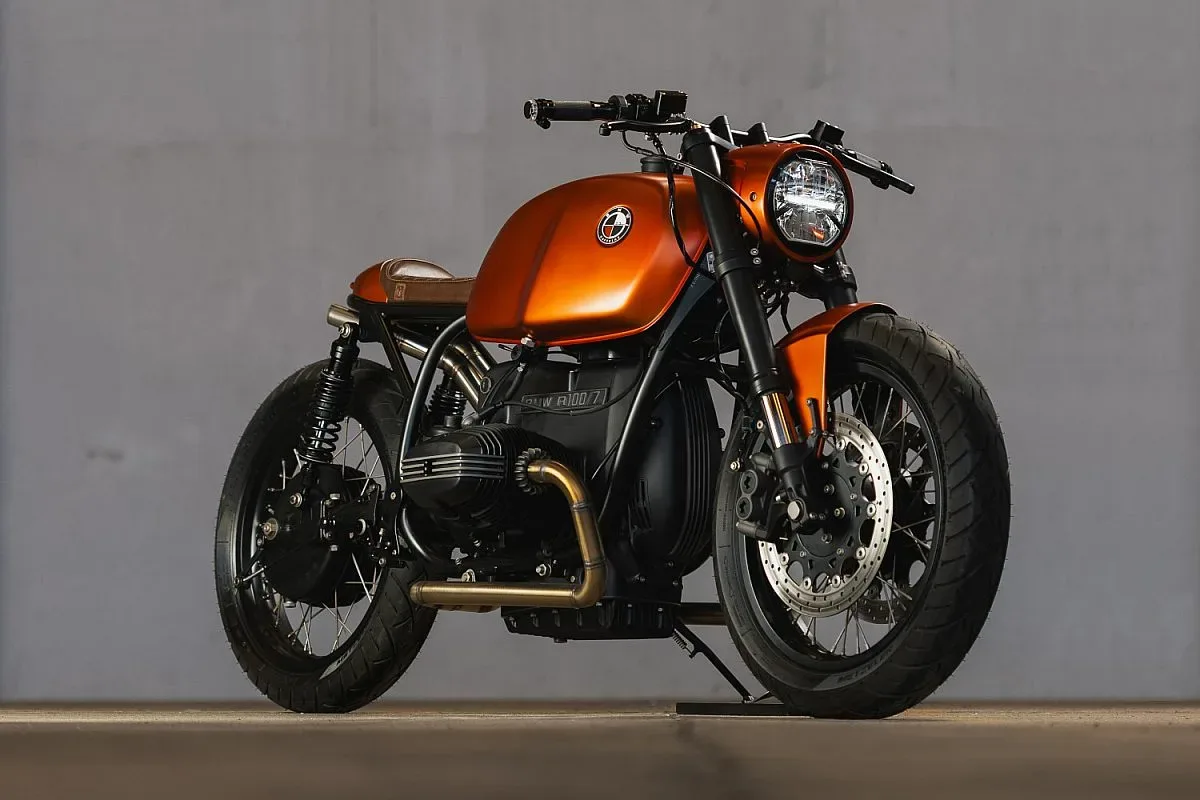
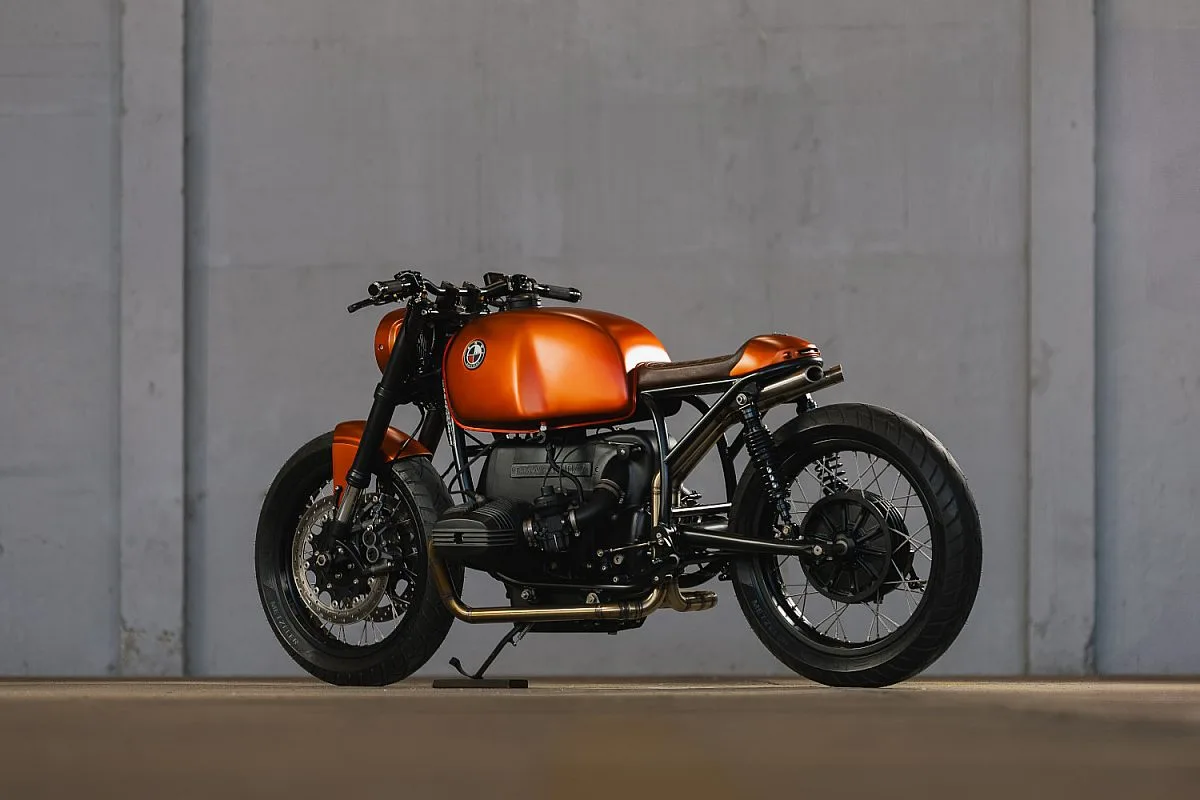
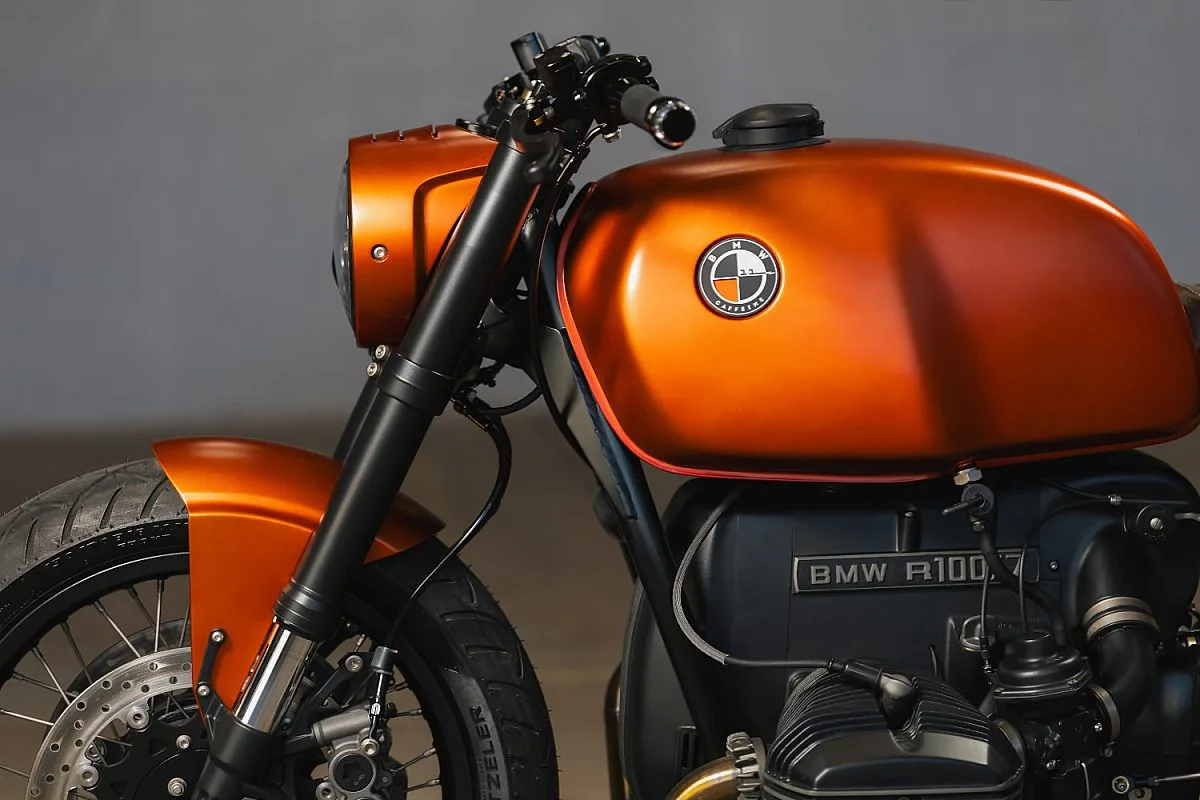
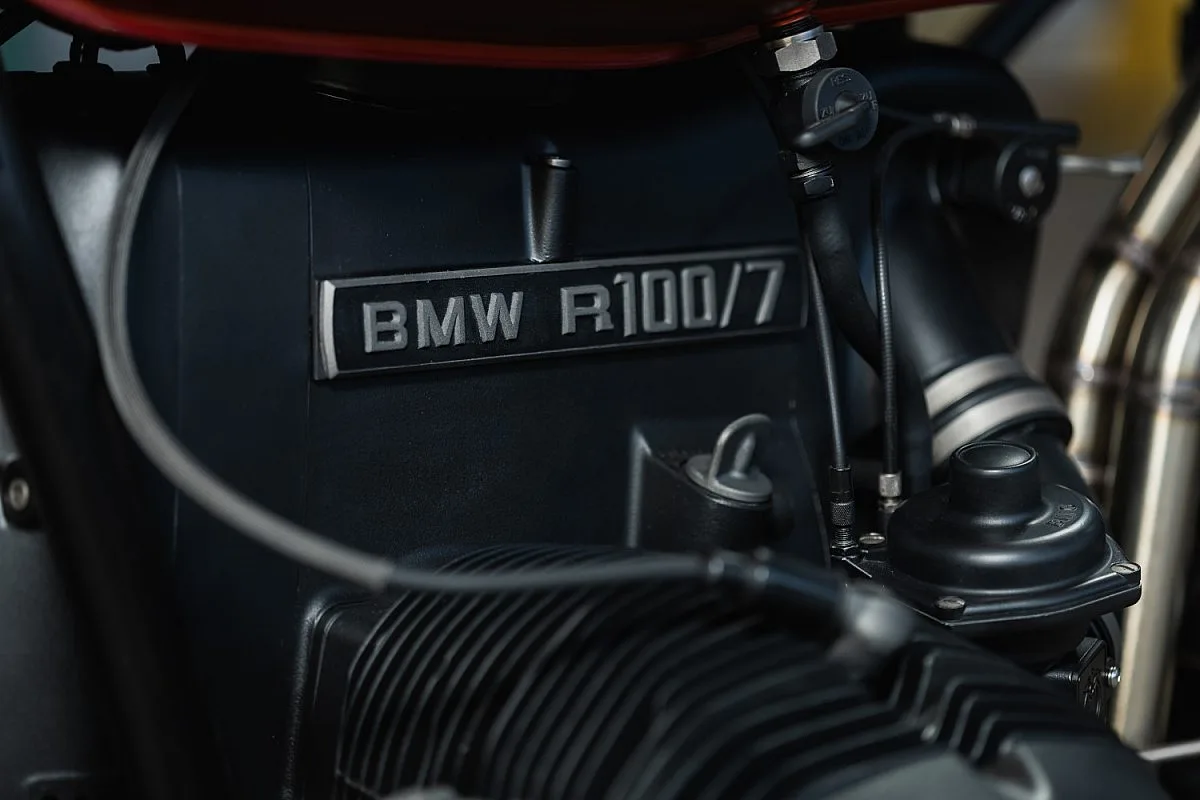
Almost all the BMW R100/7s that get turned into cafe racers end up with the same ingredients: a short seat, chrome pipes and a lot of matte black. Bruno Costa, of Caffeine Custom, wanted to avoid exactly those clichés. The result is a 1976 R100/7, single-seat and a vivid orange, that pays homage to the gradient paint the bike left the factory with.
From car designer to motorcycle builder
Costa works in Rio Grande do Sul, in southern Brazil. Before turning to motorcycles he was an automotive designer who worked with 3D computer models for Brazilian carmakers. Today he solves the parts by hand: on this bike, everything he created he shaped in metal, without resorting to 3D printing. His style is clean and minimalist, and that restraint shows even on such an eye-catching bike.
A bike to ride
It was commissioned by a client who wanted an aggressive single-seater, but with a comfortable, slightly relaxed riding position, far from the extreme tuck of racing bikes, because he plans to ride it often alongside his other bikes. There were two clear conditions: the original tank and the boxer engine had to stay.
What they did to it
- Front end: a complete inverted fork from a Yamaha R1, lowered an inch and revalved.
- Brakes: two R1 calipers and radial discs, mounted on the original BMW front hub.
- Wheels and tires: 18-inch aluminum rims front and rear, in place of the stock 19-inch front wheel, with Metzeler Marathon Ultra 130/70-18 tires on both axles.
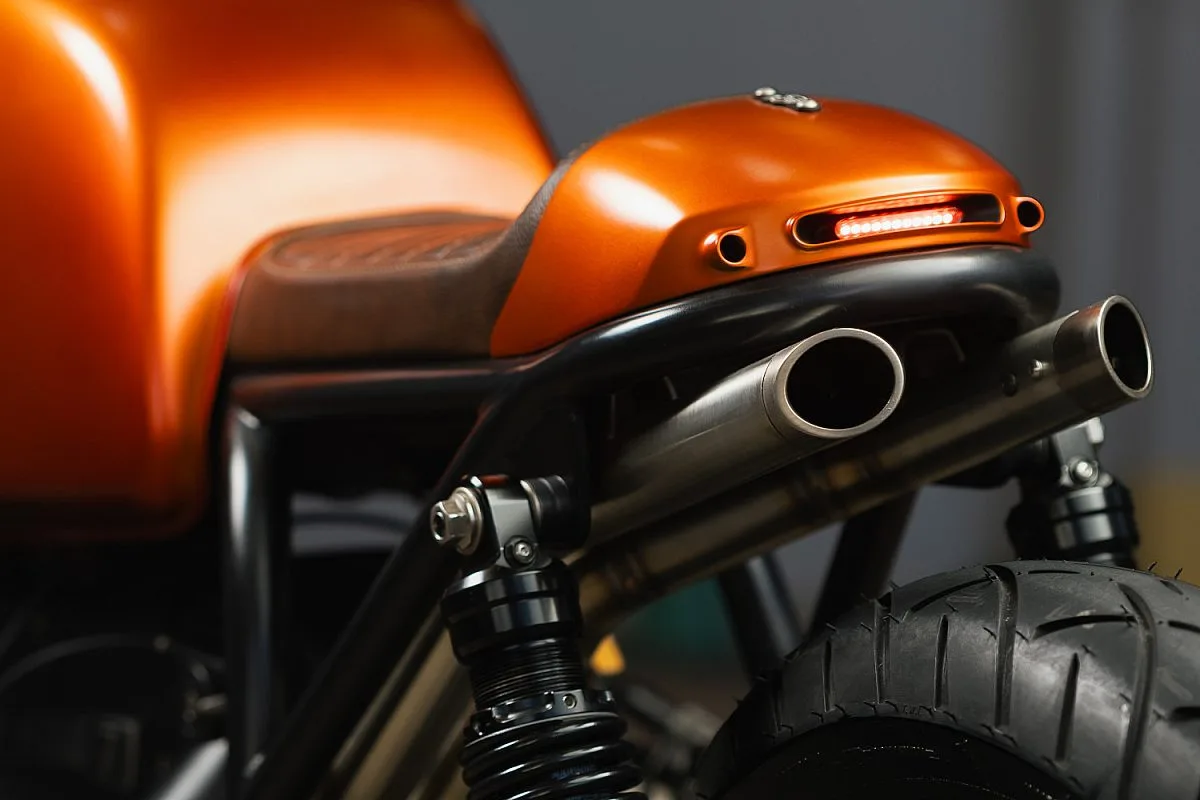
- Subframe and tail: a custom tubular steel subframe that keeps the tail short, with a hand-shaped steel cowl, an integrated LED taillight and turn signals.
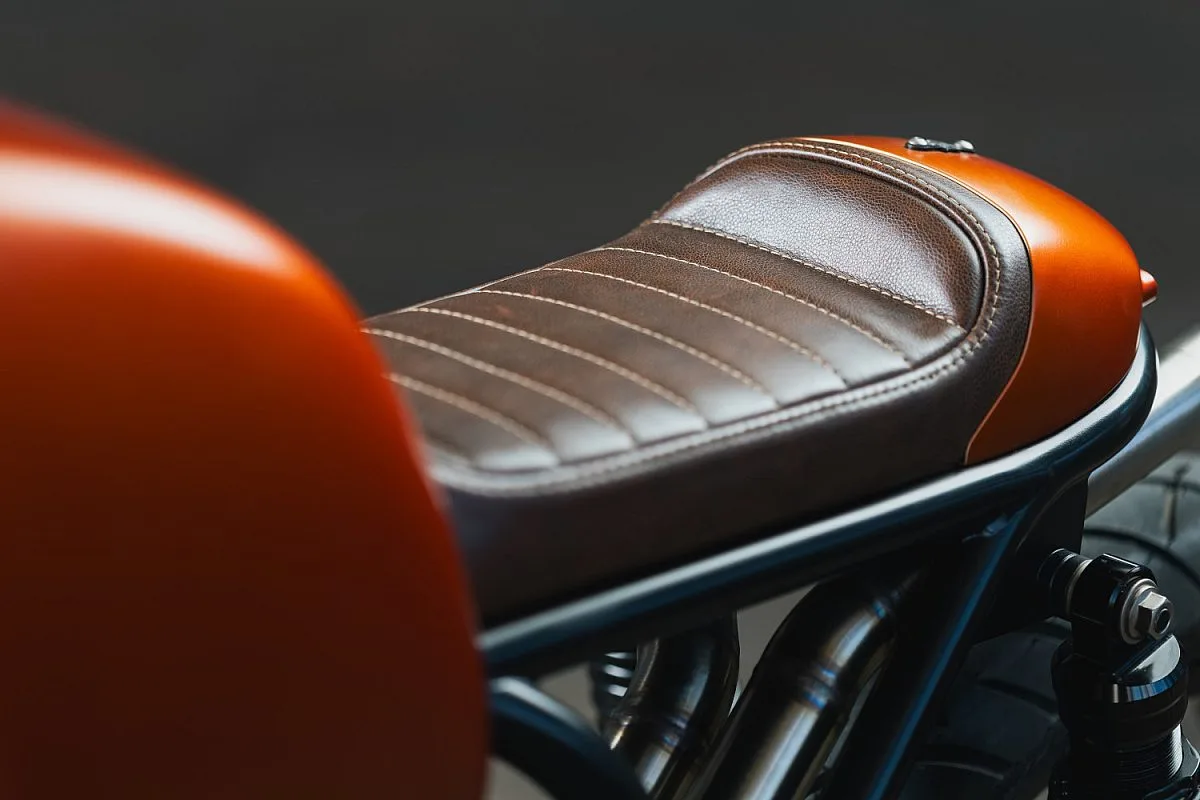
- Seat: an aluminum base with tufted brown leather, and a heat shield underneath because of the exhaust routing.
- Engine: the boxer and its original carburetors are left untouched. A custom air intake is added and the jets are re-tuned.
- Exhaust: independent stainless steel headers that join behind the crankcase, rise through the former battery space, pass under the seat and exit under the tail. It's built in removable sections to make servicing easier. Costa had thought of a collector under the bike, but changed to a high exit at the client's request.
- Electrics: a simplified wiring harness and a compact lithium battery under the tank. The wiring runs inside the handlebars and the steering stem.
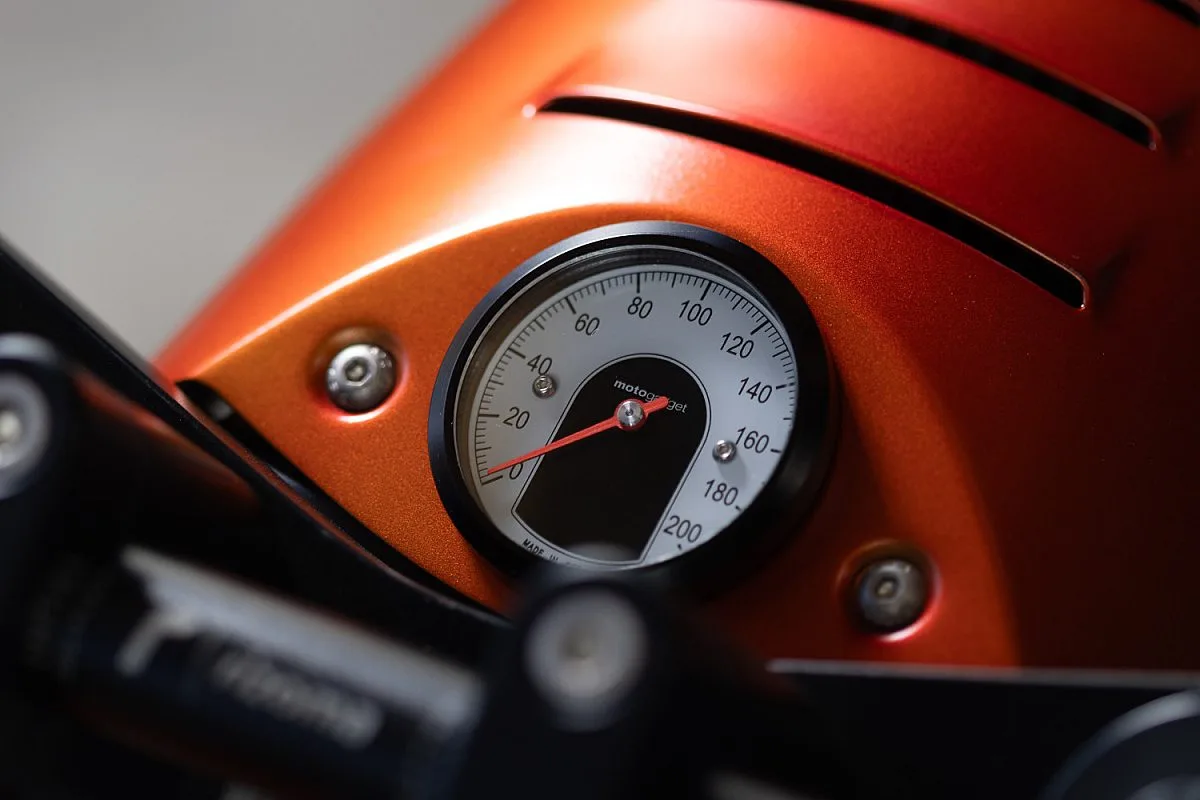
- Dash and controls: Renthal aluminum handlebars, a Motogadget Motoscope Tiny speedometer set into a custom headlight and Motogadget bar-end turn signals.
- Paint: layered candy orange over a metallic base, with a custom-blended satin clear coat. A striking departure from the shop's usual grays and matte blacks.
Spec sheet
| Base bike | 1976 BMW R100/7 (980 cc air-cooled boxer twin, five-speed gearbox) |
|---|---|
| Builder | Bruno Costa, Caffeine Custom (Rio Grande do Sul, Brazil) |
| Fork and brakes | Yamaha R1 inverted fork with two calipers and radial discs |
| Wheels | 18" aluminum rims and Metzeler Marathon Ultra 130/70-18 |
| Engine | Stock, with a custom air intake and re-tuned carburetors |
| Exhaust | Stainless steel, high exit under the seat, in removable sections |
| Dash | Motogadget Motoscope Tiny and Renthal handlebars |
| Paint | Candy orange over a metallic base with a satin clear coat |
What we like and what gives us pause
We like that it dared to use color: painting a boxer orange instead of matte black is a bold decision, and the combination with the brown leather and stainless steel looks great. We also like that it keeps the original tank and engine, which give it its character, and that the exhaust is removable, a practical detail you almost never see.
The doubts are the usual ones with an R1 inverted fork on a 1970s bike: the whole changes a lot how it brakes and turns, and an exhaust that runs under the seat demands good heat insulation, like the one it has. It's a bike to ride, but also one to examine with a magnifying glass.
What about Spain? What would need homologating
If you did something similar with a BMW airhead registered here, these are the modifications to check before you start, always depending on the case and what appears on the registration sheet:
- Suspension: an inverted fork from another bike and radial brakes significantly change how the bike behaves.
- Wheels and tires: going from 19 to 18 inches in front and changing size from the registration sheet.
- Subframe: a custom tubular one with a new tail affects structure and the passenger seat.
- Exhaust: a custom system with independent headers must meet noise and emissions limits.
- Headlight, turn signals and taillights: an integrated LED taillight and turn signals at the ends of the handlebars must be approved and properly positioned.
This is indicative information and does not replace the judgment of the ITV station (Spain's roadworthiness inspection). If you have a BMW from that era, see our BMW R80 guide, find out how homologation of modifications works or tell us about your bike (all in Spanish). Another R100 with a style of its own: the Hookie Co. R100.
Source and credits
Bike built by Bruno Costa, of Caffeine Custom. Photography: Paulo Pretz. The story was originally published by Bike EXIF. This article is our own summary and commentary.